Proof-of-delivery files are rarely tidy PDFs. Drivers snap a clipboard in a doorway, upload from a phone, and ops inherits glare, thumbs, and cropped signature blocks. Storing images in Drive answers “do we have a file?” It does not answer “who signed, when, for which reference?”
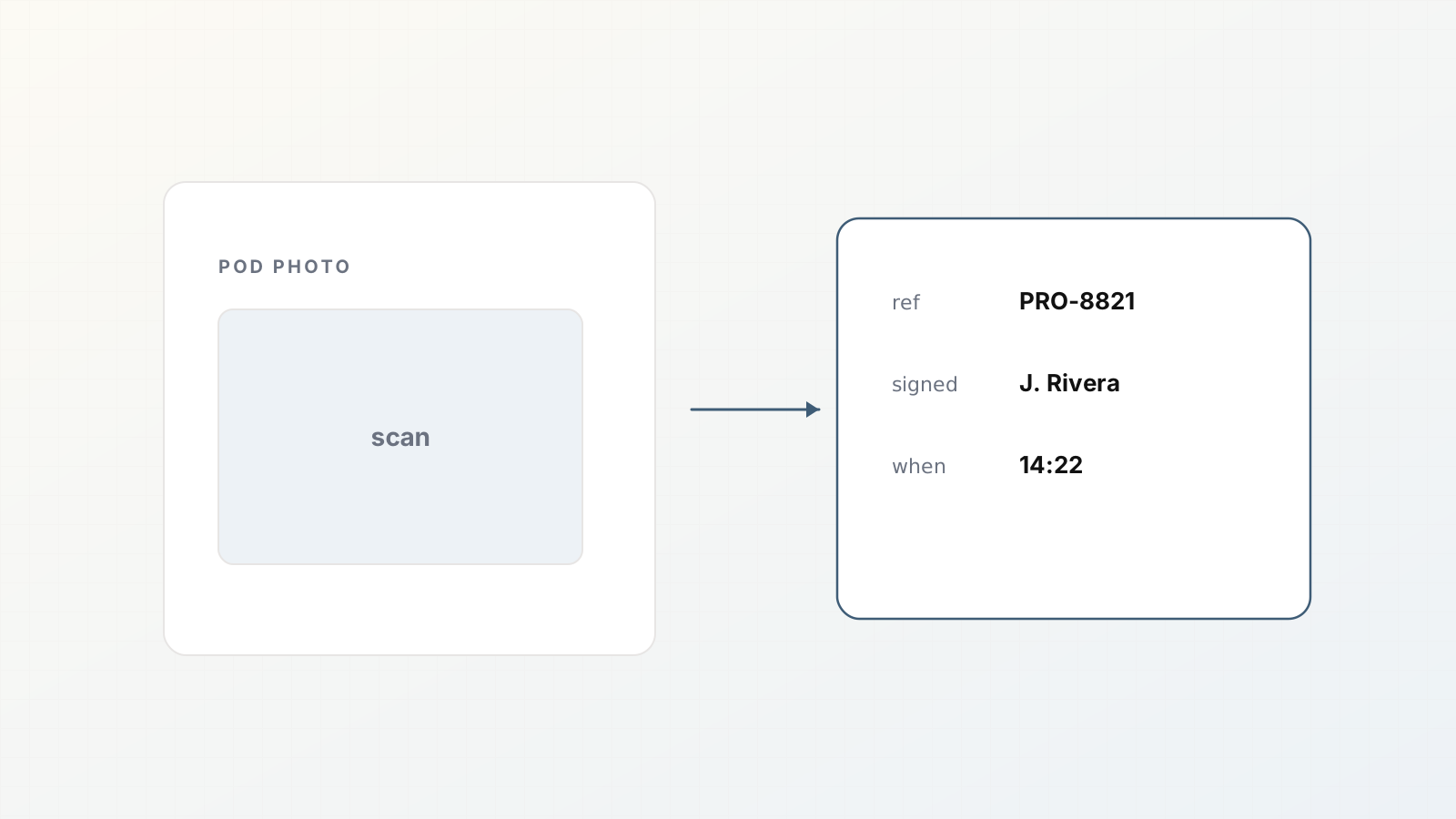
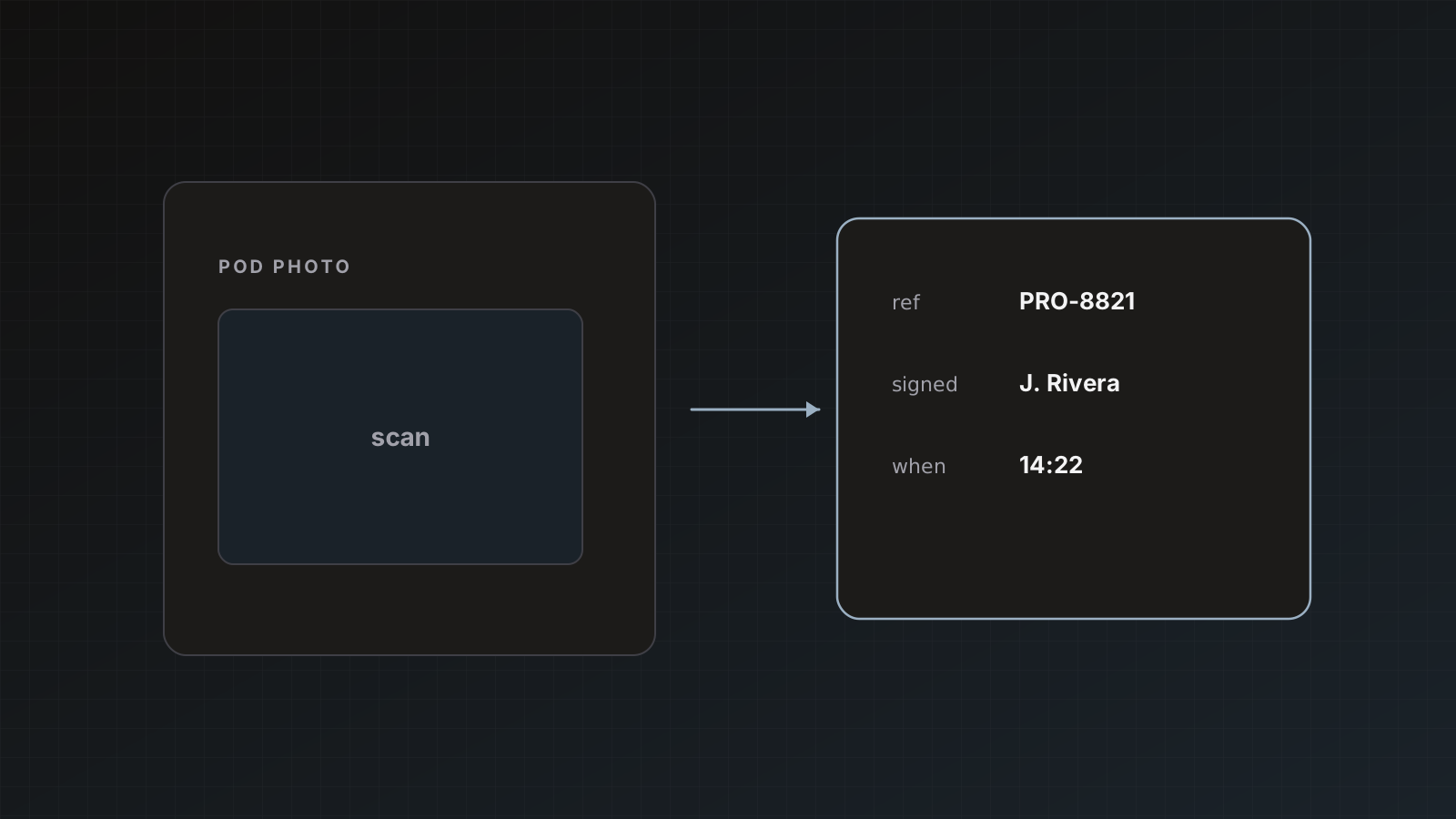
Document extraction with OCR and a short schema turns POD images into rows. Review stays mandatory for blurry captures.
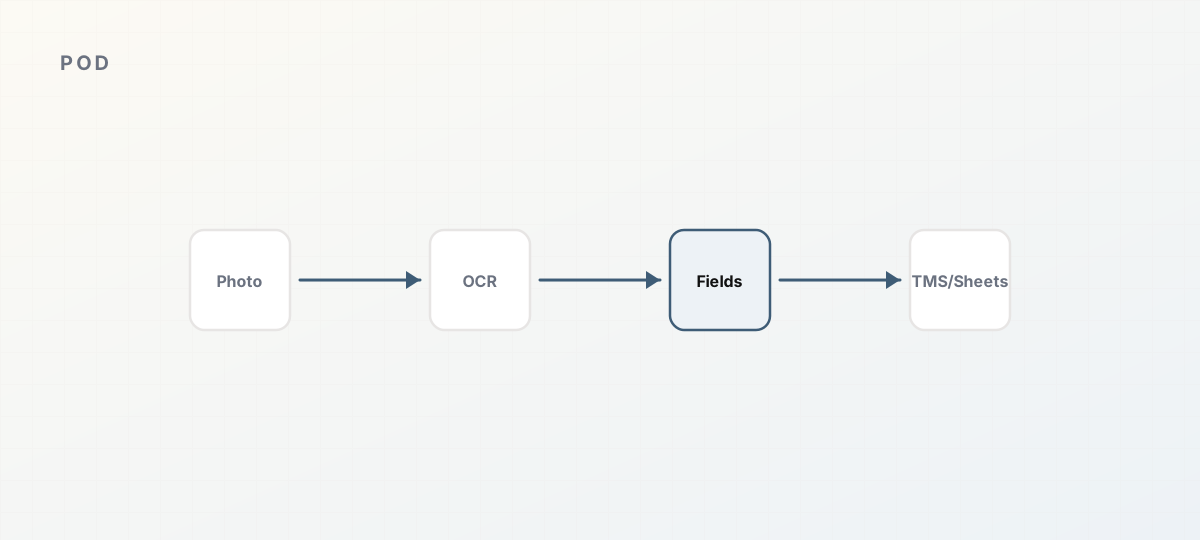 POD photo to structured fields.
Fields that earn their place
Keep the parser thin:
- Shipment / PRO / reference number
- Delivery date and time (as printed or written)
- Recipient name
- Delivery address
- Exception or shortage notes
- Driver or route id if you actually use it
Skip decorative letterhead fields. Schema discipline: Design invoice parser schema principles apply equally here.
Intake that matches the field
- Email forward from driver or dispatcher mailboxes
- Google Drive folder imports for daily dumps
- Zapier from your TMS or mobile app when a File object exists
- Direct upload for exceptions
OCR runs automatically on photos and scans. Document intake.
Review for logistics reality
Expect more touches than clean AP PDFs. Use PDF/image text selection when reference numbers are readable but missed. Reject or re-request captures that cannot support a dispute. Review with text selection.
Multi-stop packets in one PDF should split into children when types/segments differ. Packets.
Destinations
- Google Sheets for ops dashboards
- Webhooks into TMS / custom APIs
- Zapier for Slack alerts on exceptions
- CSV export for partners
Native QuickBooks/Xero matter less here unless POD triggers billing documents you also extract.
Pitfalls
- Schemas with twenty unused carrier fields
- Auto-send of unreadable photos
- Ignoring page/credits on multi-page scan PDFs
- No link back to the image when finance disputes delivery
Where Parsedit fits
Parsedit is the extraction and review lane for POD files feeding tools you already run. Soft CTA: pilot one lane or customer with the worst photo quality first. Related: Document workflows to automate.
Dispute-ready operating rule
A POD row without a retrievable image is weak evidence. Keep the source file in Parsedit history (and in your TMS if you attach outbound). When a customer disputes delivery, open the child or document and verify the capture quality before arguing from the structured fields alone.
Lane-based pilots
Pilot one lane, one depot, or one customer with chronic POD chaos. Measure:
- Percent of photos needing re-capture
- Median review seconds
- Percent of rows with empty reference numbers
Fix intake instructions (closer photo, include reference label in frame) before you automate send.
Integrating with TMS identifiers
Whatever you put in reference_number must match the TMS key ops uses in search. If drivers photograph only the signature page without the PRO label, extraction cannot invent it. Update driver instructions before you blame the parser.
Worked example: depot photo drop
Drivers upload to a shared Drive folder nightly. Ops imports each morning.
- Drive intake into POD parser (batches of ≤25).
- Review queue sorts empty reference numbers first.
- Text-select reference from the label when readable.
- Reject captures that cannot support a dispute; request reshoot via your existing driver channel.
- Auto-send to Sheets only after two weeks of stable references.
Driver instruction card (short)
- Include the PRO/label in the frame
- Avoid glare on the signature area
- One stop per photo when possible
- Do not crop the date stamp if present
PODs are an ops data problem first. Treat photo quality as part of the pipeline design, not an afterthought for the model.
When reshoot requests become common on a lane, fix the physical process (better lighting poster at the dock, label placement) before buying a “better OCR” story. The camera angle is part of your schema’s success rate.
Proof of delivery OCR, POD data capture, and delivery scan to spreadsheet are high-intent ops searches. Stress reference numbers and reshoot rules.
FAQ
Handwritten signatures as data? Capture recipient name fields when printed; treat signatures as image evidence in the stored file.
Mobile app required? No. Email and Drive cover many fleets.
How do credits work for photos? Image pages still consume page credits per processed page counts as billed.
Create a POD parser, import last week’s worst photos, measure review time. Start free.