Vendor PDFs will not standardize for you. Your schema can. A parser schema is the contract between messy files and clean destinations: the field names, types, and line-item shape you expect every time.
Get the contract wrong and reviewers drown in unused boxes. Get it right and new vendors mostly fit without a rebuild.
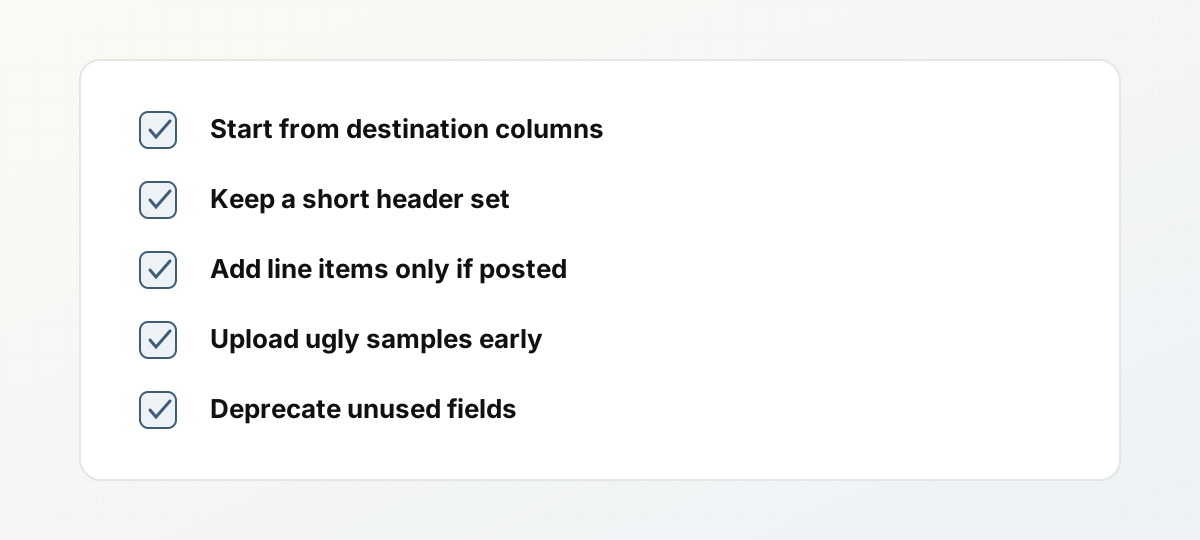 Schema design checklist for invoice parsers.
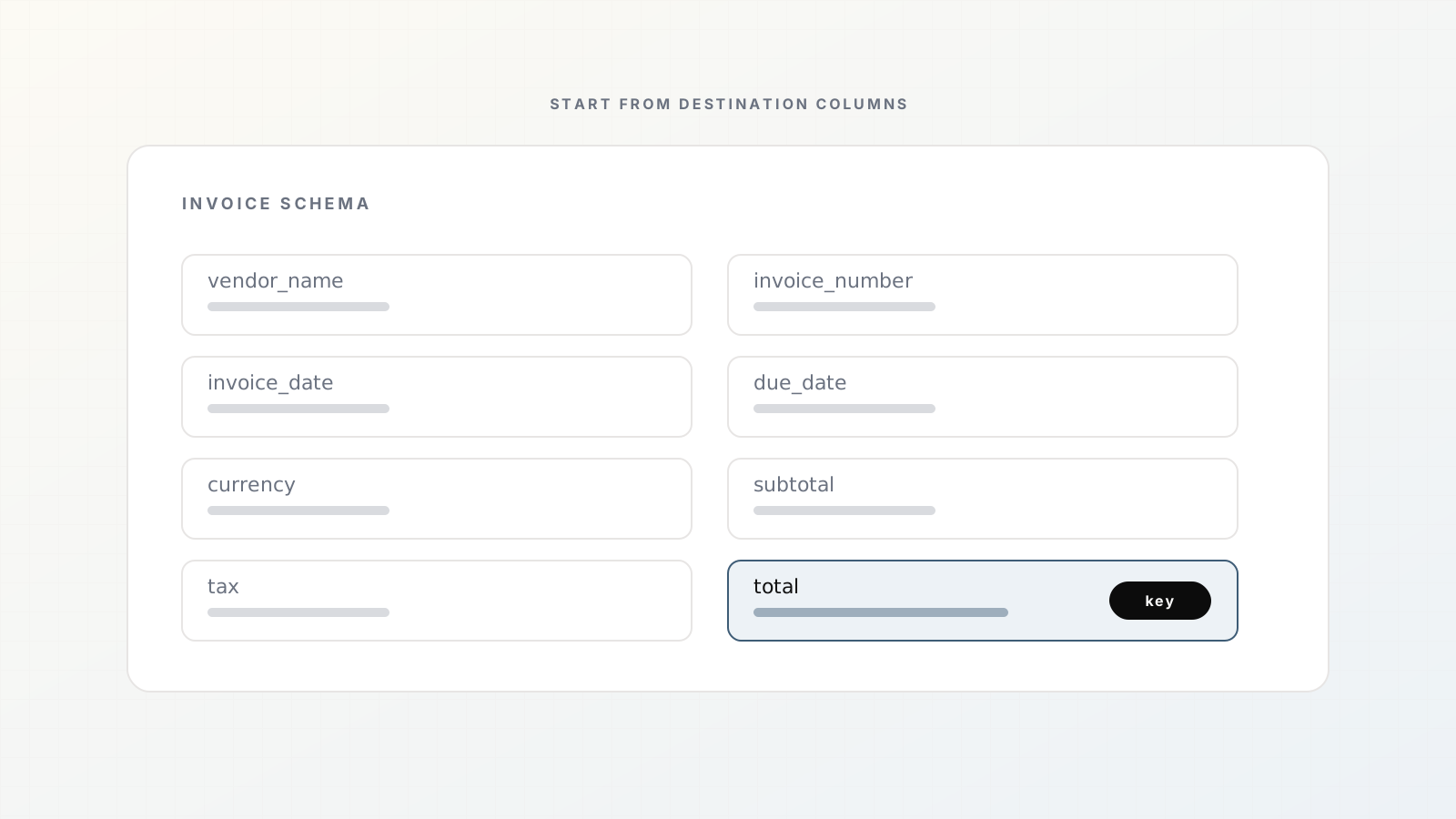
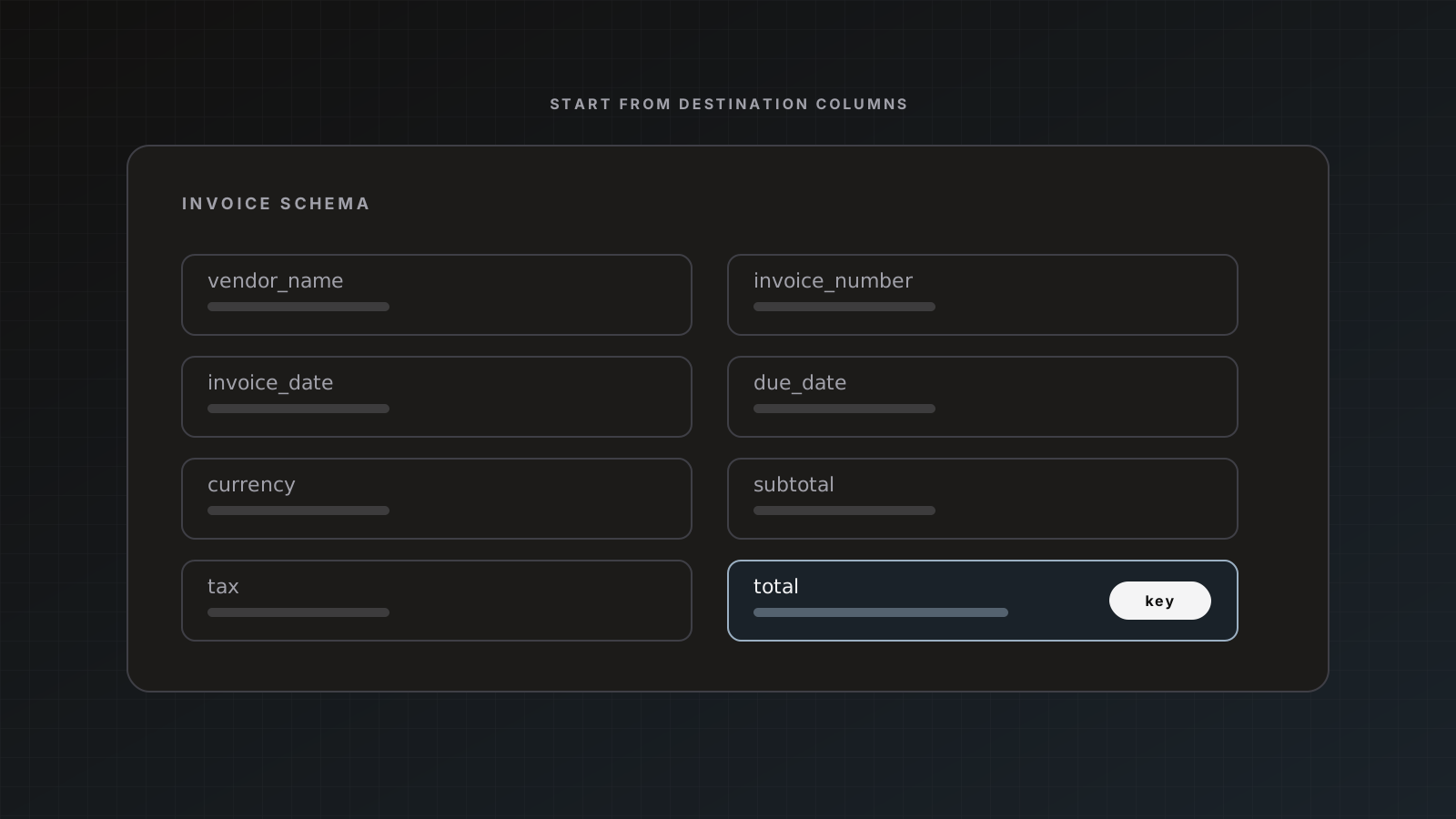
Start from the destination
List where approved data goes in the next 90 days:
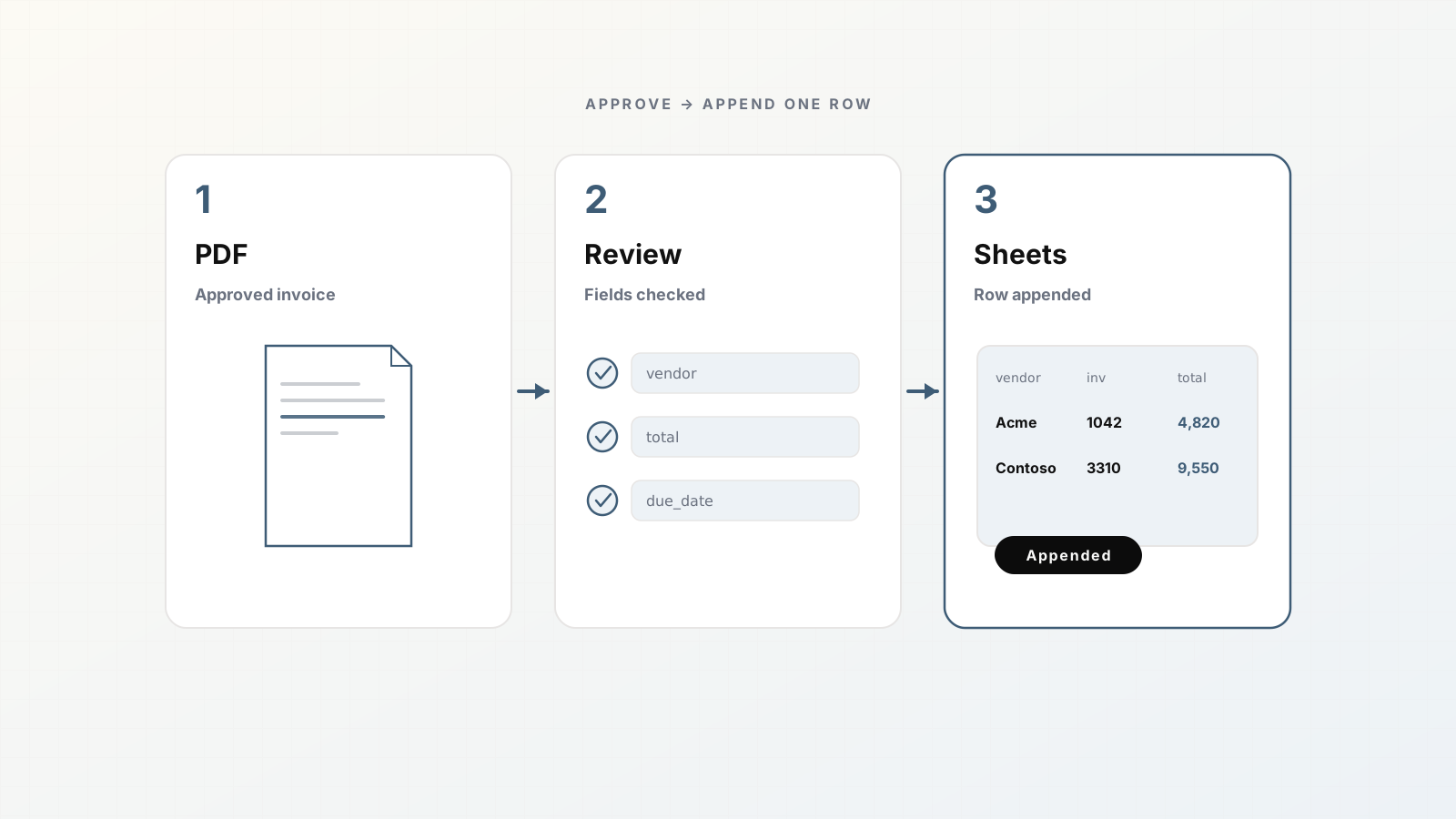
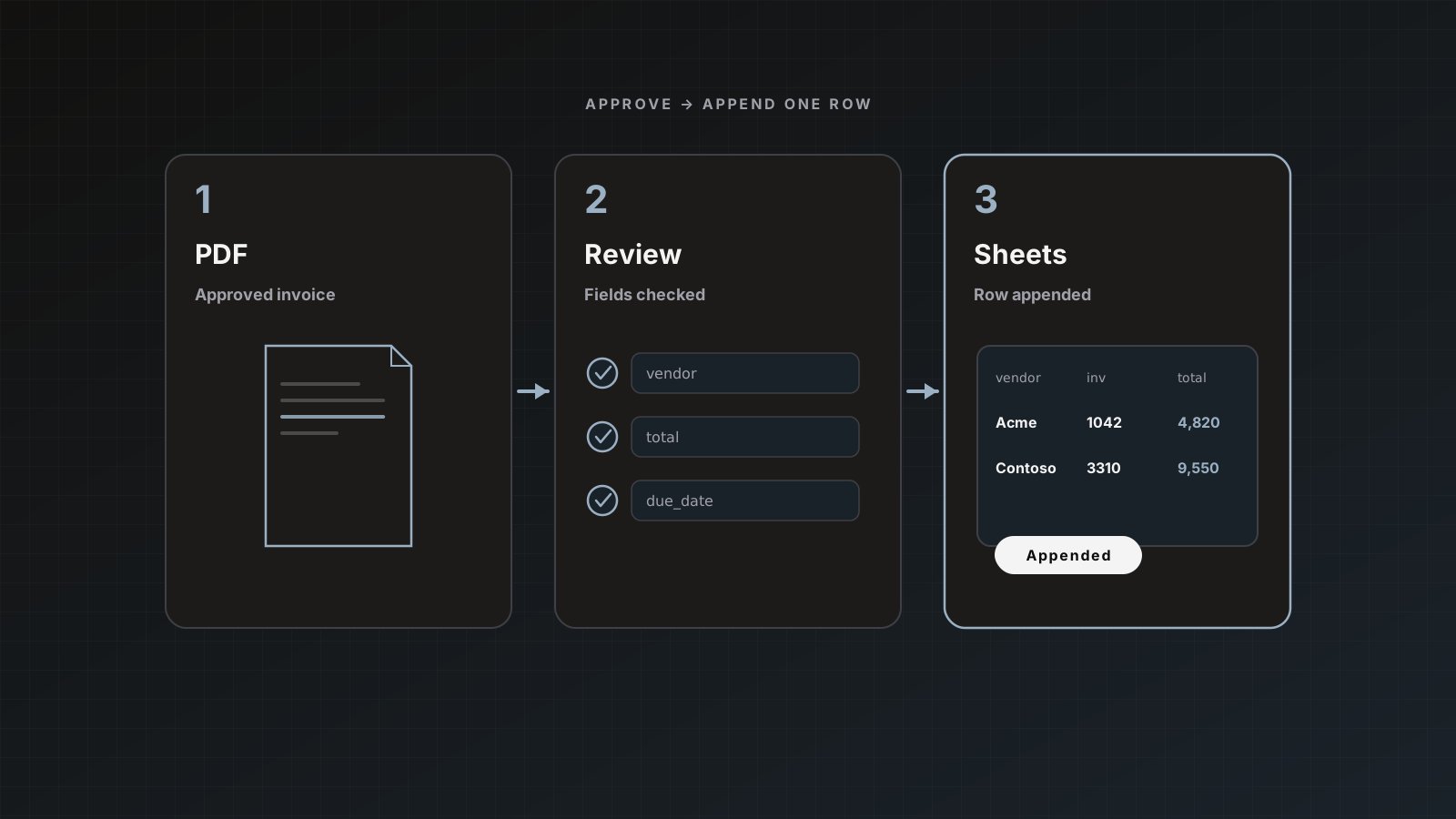
- Google Sheets columns for an AP tracker
- QuickBooks bill fields (vendor, DocNumber, dates, amounts)
- Xero bill fields
- Webhook JSON keys your app already parses
Those names win. Rename template fields to match. Parsedit templates are starting points you edit with Edit template. Docs: Document templates.
For most AP staging sheets:
| Field | Why |
|---|
| vendor_name | Match / create vendor |
| invoice_number | Dedupe and audit |
| invoice_date | Period posting |
| due_date | Cash planning |
| currency | Multi-currency AP |
| subtotal | Footing checks |
| tax | Tax posts |
| total | What you pay |
| po_number | Match when required |
Add remittance email, payment terms, or bill-to only if someone uses them weekly. Optional forever-fields become review noise.
Line items: include with intent
Ask one question: do we post or analyze line detail?
- Totals only: keep line items out of the happy path. Reviewers move faster.
- Detail required: include description, quantity, unit price, amount. Add SKU/tax code only if GL mapping needs them.
Fighting a huge line-item table for a totals-only process is how pilots die. Deep dive: Capturing invoice line items.
Types and normalization
Prefer explicit types for dates and numbers so destinations do not get 01/02/03 ambiguity or $1,234.00 strings when they want 1234.00. During review, normalize once; do not rely on sheet formulas to clean every row forever.
Multi-vendor reality checks
Upload 8–12 real files before you freeze the schema:
- Top 5 vendors by volume
- One international currency
- One credit note or negative total if you see them
- One scanned PDF
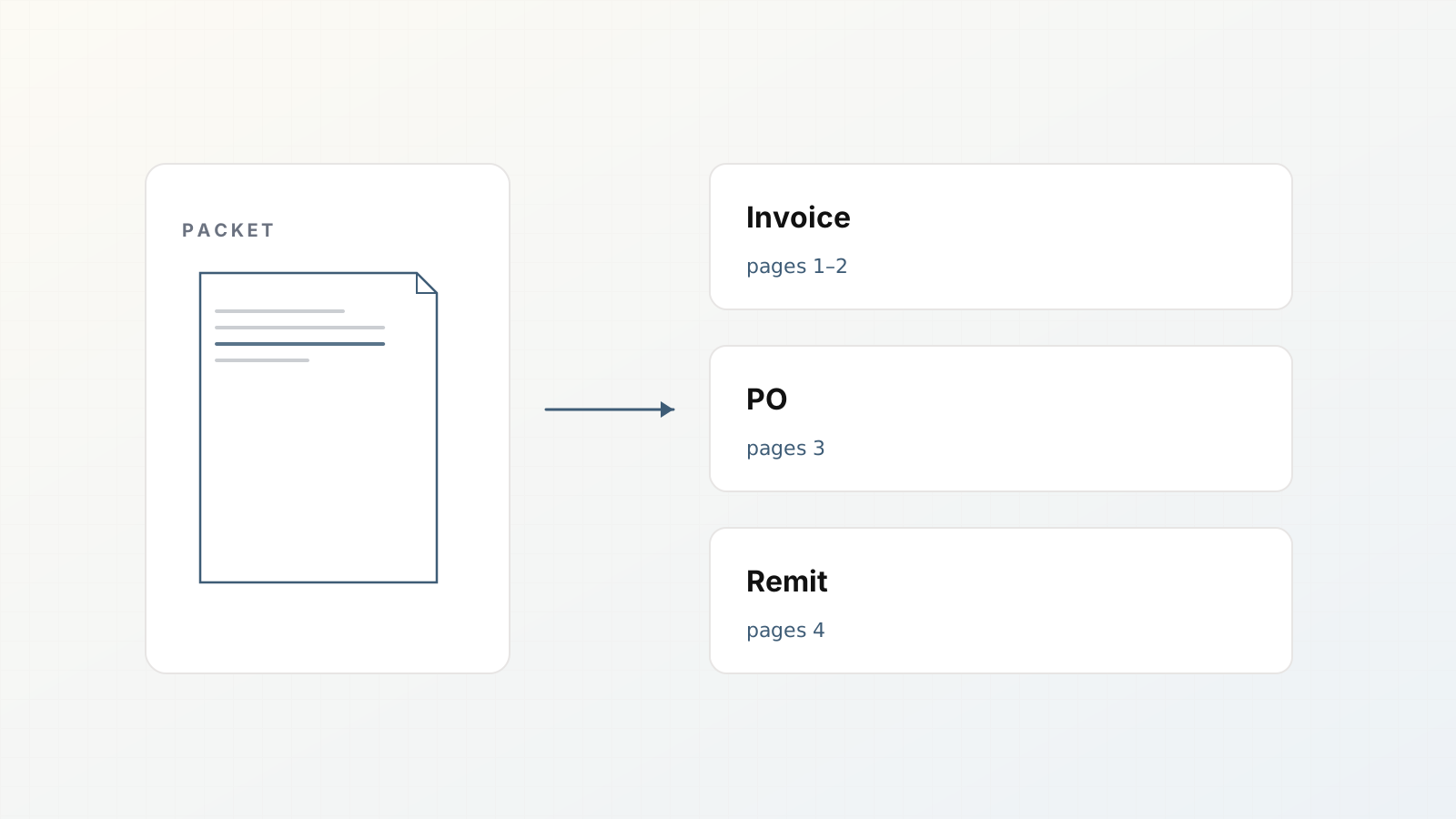
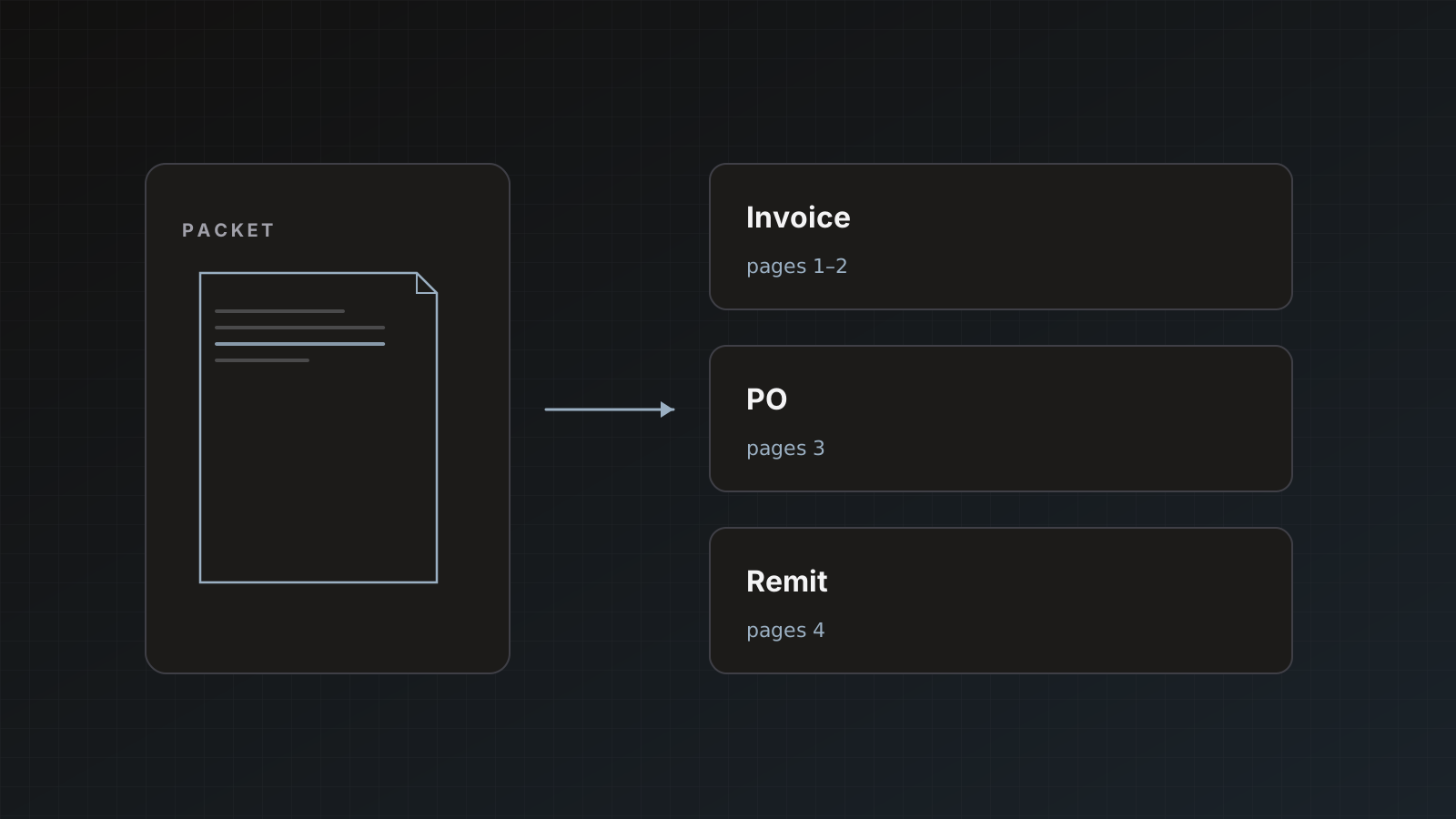
- One mixed packet (invoice + PO)
Adjust field names after you see repeated misses. PDF text selection covers one-offs; template edits cover patterns. Review guide.
Packets and multiple schemas
If PO fields regularly appear beside invoices, do not cram PO-only columns into the invoice schema. Use packet splitting and, when intake volume justifies it, separate parsers for POs. Document packets.
Versioning without drama
Template changes apply to future uploads. Old documents keep the fields they were extracted with; you can still edit values in review. Communicate schema changes to anyone mapping Zapier or webhooks.
Pitfalls
- Copying every label printed on a sample PDF into the schema
- Using display labels with spaces as integration keys without checking destinations
- Changing sheet headers without renaming parser fields
- One schema for invoices, receipts, and statements
Where Parsedit fits
Create an Invoices parser, trim the template, run real samples, then connect Sheets or accounting. Afternoon setup: Document extraction pipeline guide.
Naming conventions that age well
- Prefer
snake_case keys that match sheet headers - Avoid punctuation in keys
- Keep currency as its own field, not embedded in amounts
- Use
invoice_number not inv# - Prefer
vendor_name over supplier unless your ERP says otherwise
Consistency across parsers helps anyone building Zapier maps or webhooks.
Deprecating a field
- Stop requiring it in review mentally.
- Remove from template for new uploads.
- Leave historical documents alone.
- Update destination maps and docs the same day.
Do not leave zombie fields “just in case” for a year.
Cross-team schema review
Before freezing v1, spend fifteen minutes with whoever owns the destination:
- AP lead for Sheets columns
- Accountant for QuickBooks/Xero fields
- Engineer for webhook keys
That meeting prevents three parallel naming schemes.
Worked example: trimming a bloated template
You started from a full invoice template with 35 fields. Reviewers ignore 20 of them.
- Export five reviewed documents.
- Highlight fields that were always empty or never mapped.
- Remove them from the template.
- Rename the ten that remain to match Sheets/QBO.
- Re-run three vendors; confirm review feels faster.
Schema design is subtraction as much as addition.
Schema pages that rank (and help)
Useful schema guides name concrete fields, show a trimmed list, and warn against universal invoice ontologies. That is what practitioners bookmark.
FAQ
Should field keys be pretty or stable? Stable and match the destination. Pretty labels can differ in the UI if your tool allows; Parsedit focuses on template field identity for mapping.
How often should we revise the schema? After the first week of real volume, then only when a destination or posting policy changes.
What about vendor-specific fields? Add a field when at least a few vendors need it weekly. Otherwise keep it in notes outside the parser.
Trim the template, run ugly samples, then lock headers. Start free.