Line items are where invoice schemas go to die. Someone adds SKU, tax code, GL, project, and warehouse columns “for later,” and every reviewer slows down on vendors that only needed a total.
Capture line items when posting or analysis needs them. Skip them when your process is totals-only. The middle ground is a short table you can actually maintain.
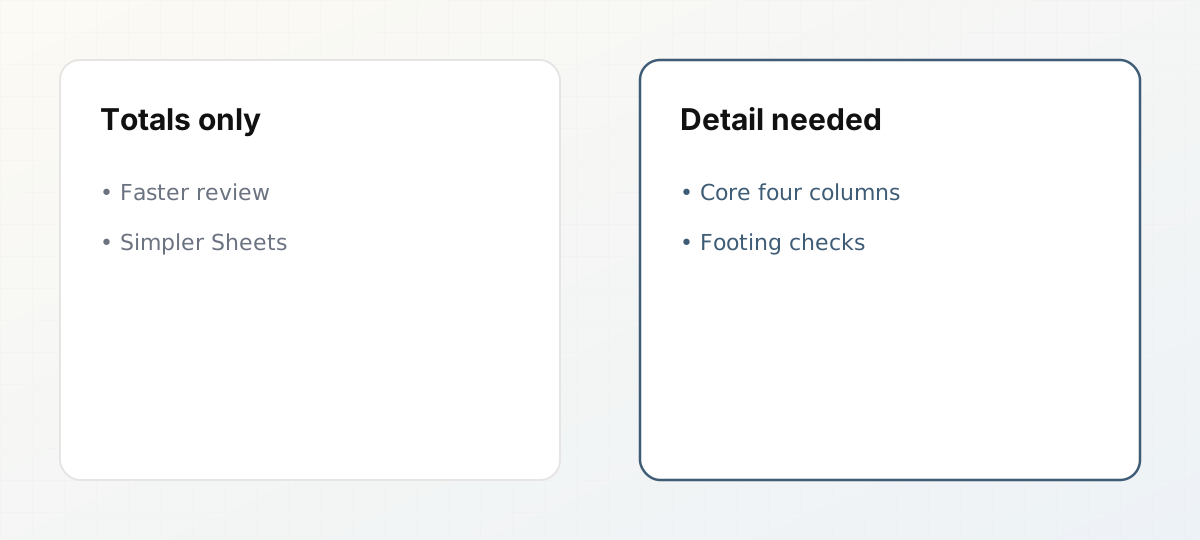 Totals-only versus line-item detail.
Decide with one question
Do we post or report at line level this quarter?
- No → keep header fields only. Faster review, simpler Sheets.
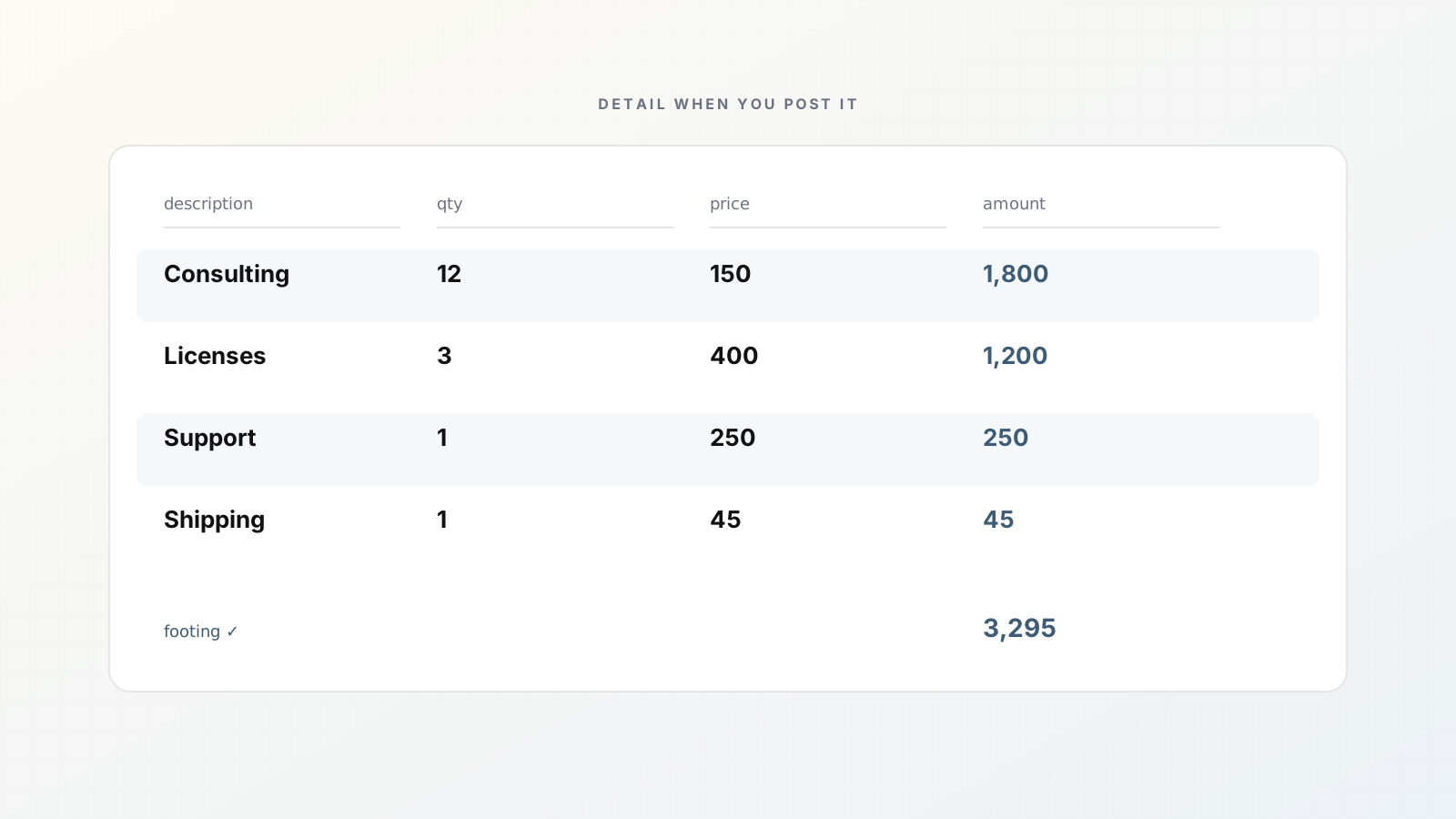
- Yes → add description, quantity, unit price, amount as the core four.
- Maybe later → do not pre-build twenty columns. Add when a destination requires them.
Header design still comes first: Invoice parser schema, AP extraction.
A minimal line-item table
| Column | Purpose |
|---|
| description | What was sold/served |
| quantity | Count or hours |
| unit_price | Rate |
| amount | Line total |
Optional only with owners:
- sku / item_code
- tax_rate or tax_amount
- gl_code (often better mapped downstream)
How review works in Parsedit
Open Preview, expand line-item tables, edit cells, use PDF text selection when a description was truncated. Save changes or Save & send. Docs: Review and approval.
Templates include line-item structures for invoice types; edit with Edit template. Document templates.
Destinations and line items
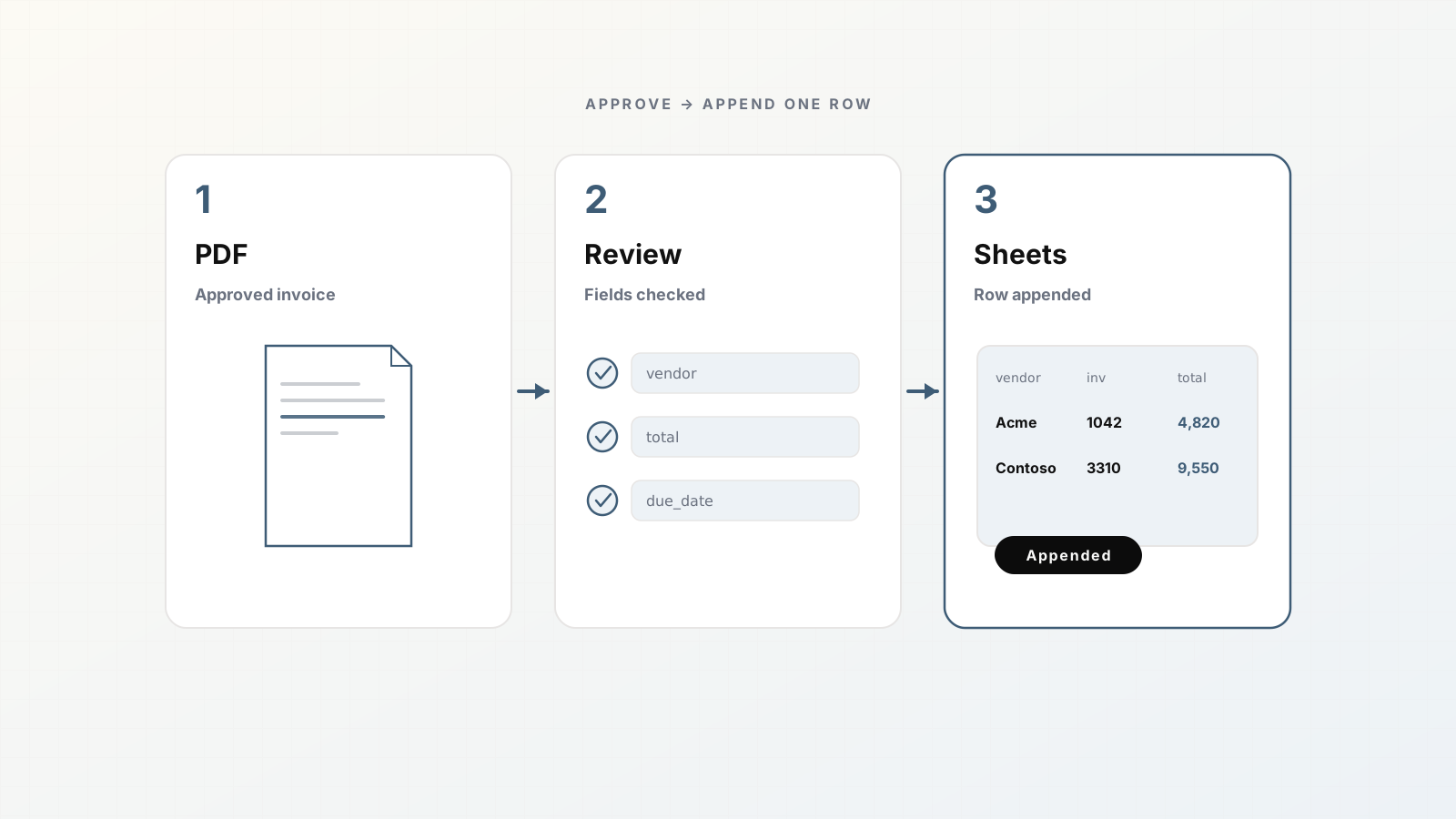
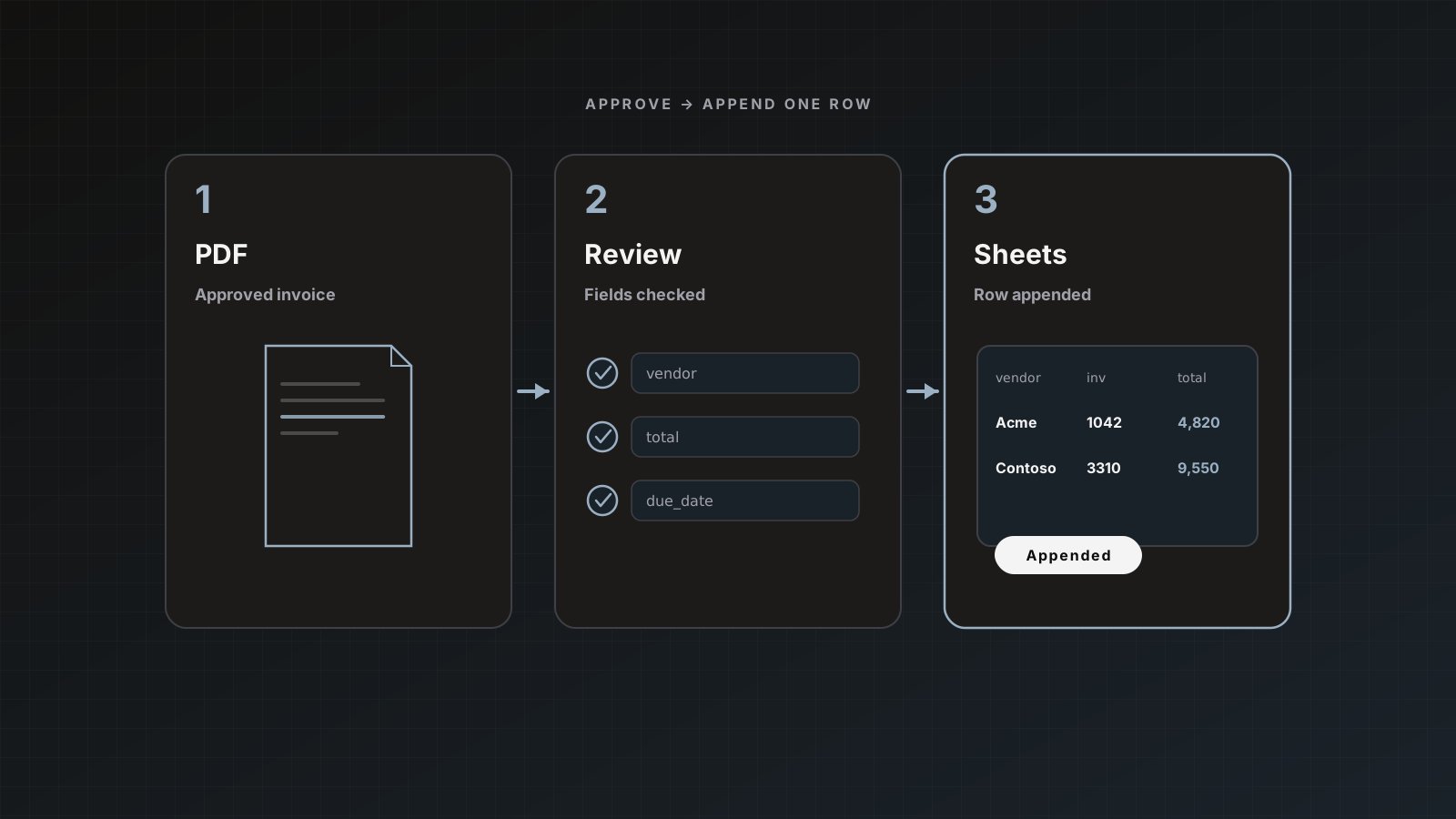
- Sheets: document-level append is the common path; confirm how your tracker expects detail (sometimes header only).
- QuickBooks / Xero: line detail matters when bills should include item rows; test one vendor before auto-send.
- Zapier / webhooks: map line-item fields after testing the trigger; schema stability matters.
Pitfalls
- Exploding every PDF table into fields you never post
- Mixing shipping/tax header amounts into line rows inconsistently
- Assuming line counts always match the PDF without footing checks
- Enabling auto-send while line tables are still noisy
Where Parsedit fits
Parsers expose line-item tables in review without forcing them into every workflow. Soft CTA: run ten invoices with and without line items and compare review minutes. Related: Human review.
Even with good extraction, glance at:
- Sum of line amounts vs header subtotal
- Tax and shipping sitting in headers vs lines
- Credit lines or returns with negative quantities
When footing fails, fix before ledger send. Sheets staging can hold the row with a needs_footing note.
Mapping to accounting lines
QuickBooks and Xero bills often need item rows. Test one vendor with dense line tables and one with a single lump description. If your GL only needs a lump sum, posting a single expense line from the header total may be cleaner than fifty extracted rows you will collapse anyway.
When vendors put everything in one description line
Some invoices use a single narrative line with embedded quantities. Extraction may return one row. That can be acceptable for expense-style posts. If you need SKU-level analytics, you may need vendor process changes, not only a richer schema. Tools cannot invent structure the PDF refuses to provide.
Worked example: totals-only AP vs detail AP
Team A posts only vendor bills at header total. They remove line items from the template. Median review is under 40 seconds.
Team B needs SKU quantities for inventory. They keep the core four line columns, map into QuickBooks item rows, and accept 2–3 minute reviews on dense invoices.
Both are valid. Copying Team B’s schema onto Team A’s process is how pilots stall.
Review micro-checklist for detail mode
- [ ] Line count roughly matches the PDF
- [ ] Header total foots to lines + tax + shipping as your policy defines
- [ ] Descriptions are not duplicated header noise
- [ ] Negative lines reviewed deliberately
If you only remember one rule: line items are optional complexity. Add them when posting requires them, not because the PDF has a table.
Readers want to know whether to capture detail rows. Teach the totals-only vs detail fork early.
FAQ
Can we extract some invoices with lines and some without? Same parser will show template slots; unused lines can be empty. Separate parsers if two teams disagree.
What about multi-page line tables? Review the full document; page credits follow page count.
Credits notes and negative lines? Test samples; keep review manual until negatives behave.
Add the core four columns only if you post them. Start free.