“Fully autonomous document AI” sells well in a keynote. In an AP queue, a wrong total that posts quietly is worse than a two-minute review. Human review before send is not nostalgia. It is how you keep speed without gambling the ledger.
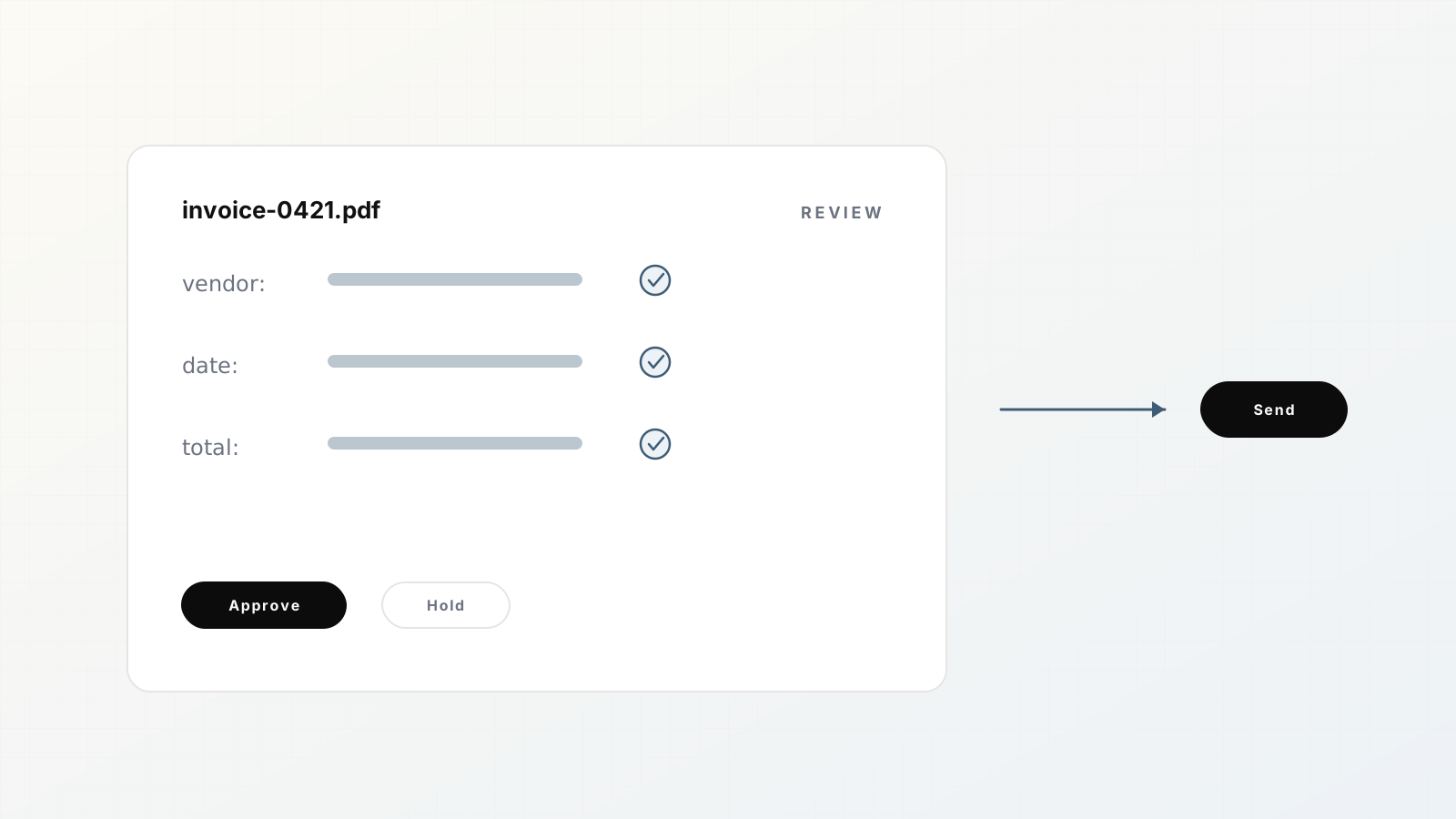
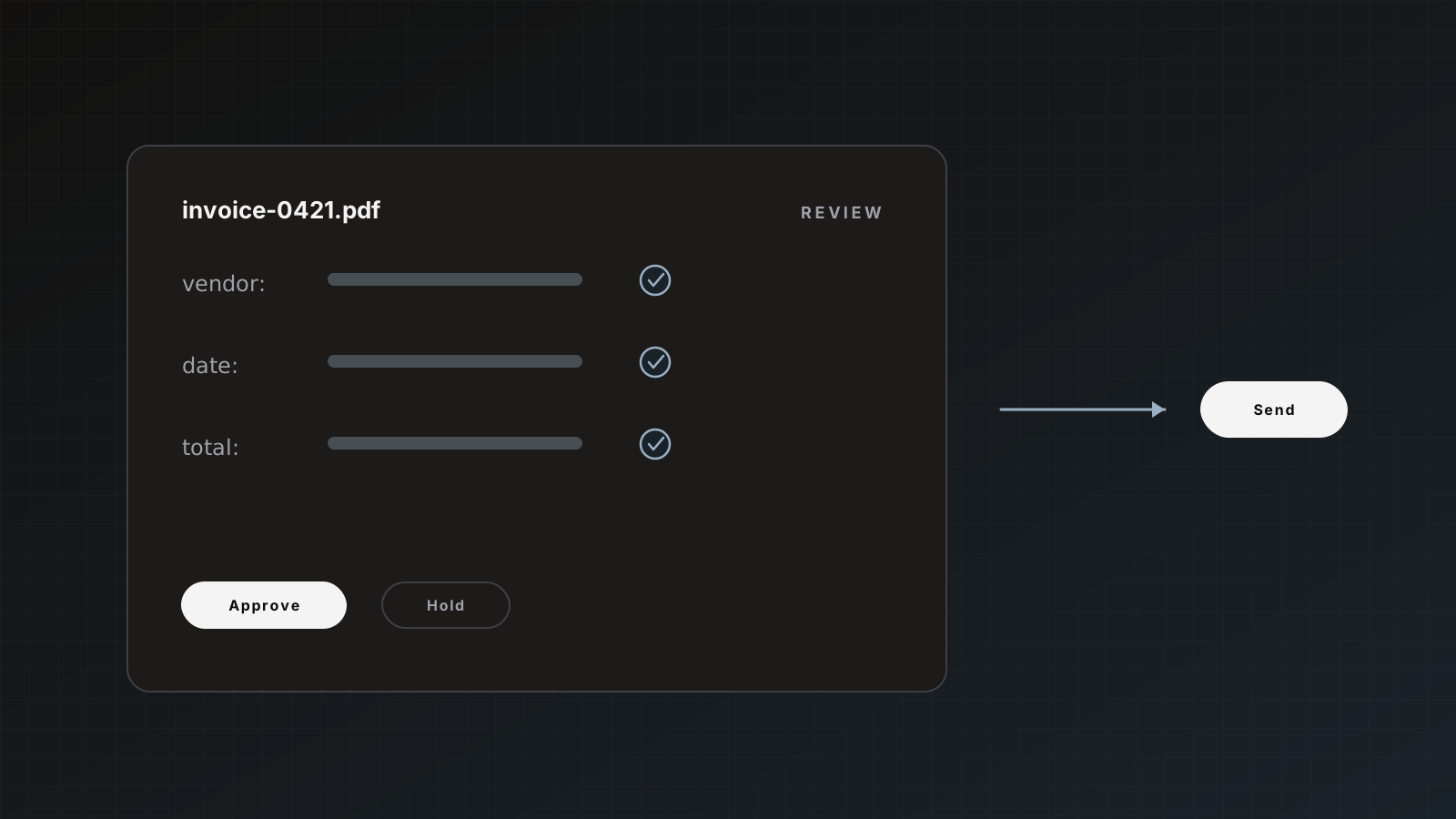
Parsedit’s default is intentional: extract, then wait for Save & send (or save without sending). Auto-send exists for later, when a parser is boringly trustworthy.
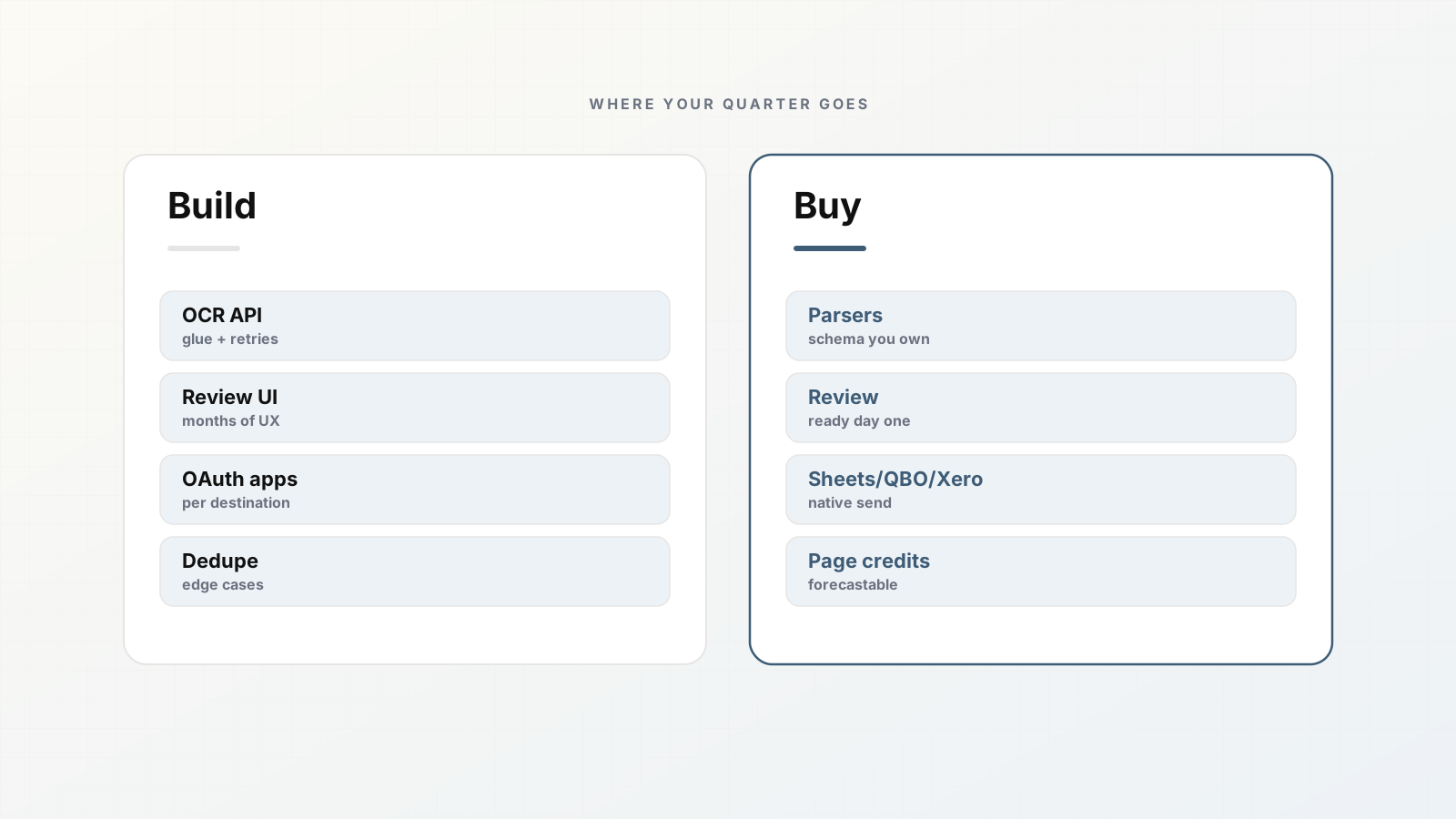
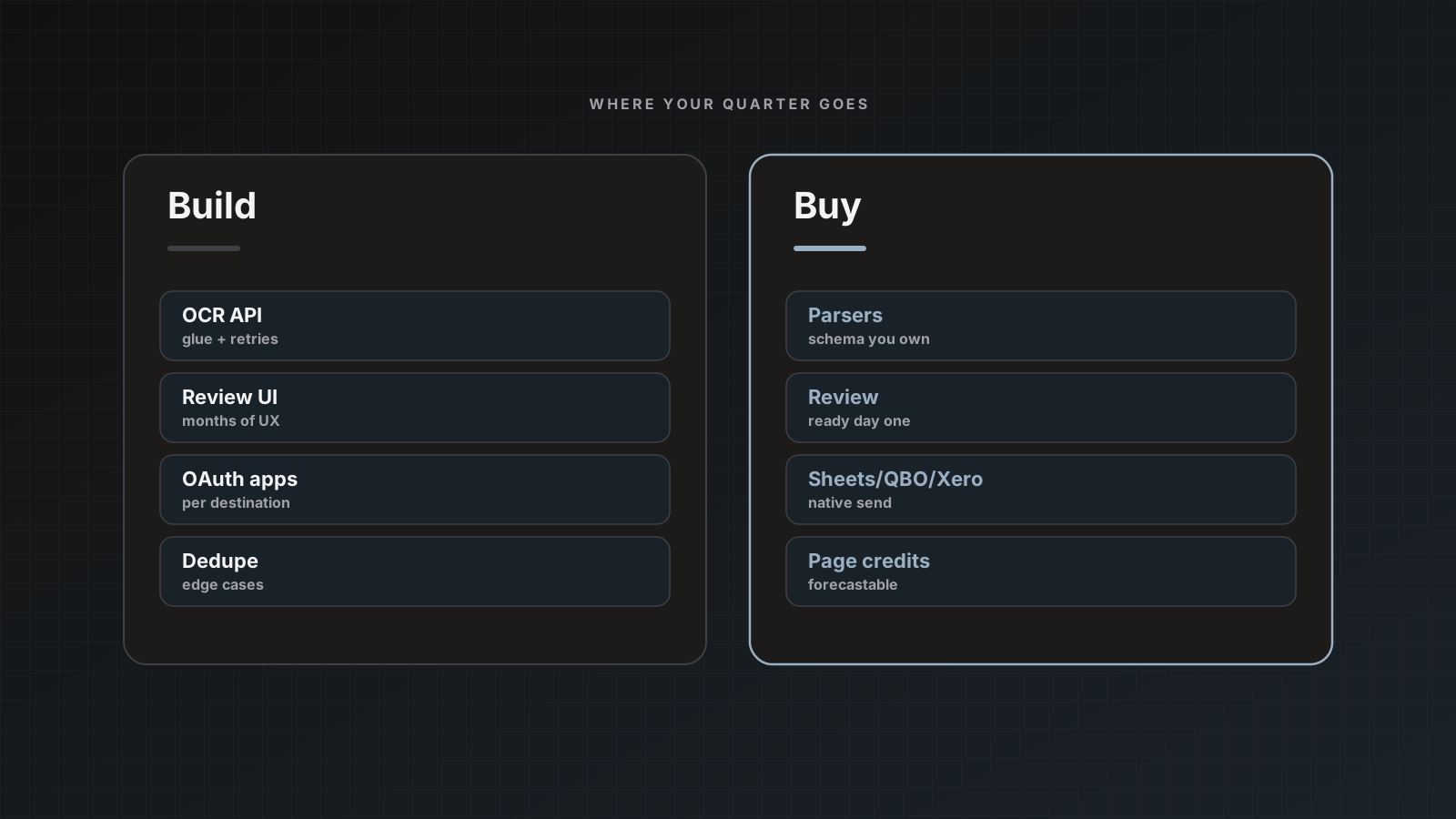
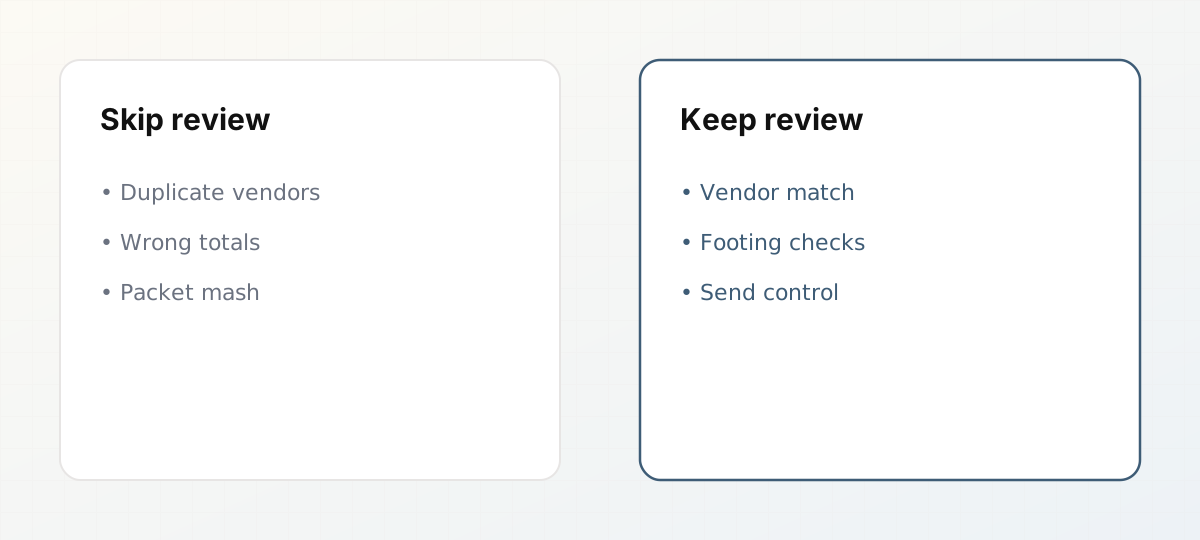 Cost of skipping review versus keeping the checkpoint.
What review is for
Reviewers are not retyping the whole invoice. They are:
- Confirming vendor identity against the ledger
- Catching total vs subtotal confusion
- Filling empties with PDF text selection
- Deciding holds, rejects, and packet children
- Choosing destinations and send modes
That is judgment layered on extraction. Product surface: Review and approval, PDF text selection.
Why confidence scores are not a full policy
Some systems auto-approve above a threshold. Parsedit does not offer confidence-based auto-approval as a substitute for your send decision. Confidence can guide humans when auto-send is off. Policy still belongs to your team: which parsers may auto-send, which destinations always stay manual.
See Automation and Auto-send vs manual approval.
Cost of skipping review (concrete)
- Duplicate vendor records from noisy names
- Bills posted with payment totals instead of invoice totals
- Packet envelopes posted as one entry
- Month-end archaeology when Sheets and ledger disagree
The minutes you “save” return as cleanup hours.
How to make review fast
- Short schemas (schema design)
- PDF beside fields, not a separate monitor marathon
- Sheets staging before ledger posting
- Separate parsers so reviewers see one document type
- Measure touches per doc; fix templates when the same miss repeats
When to loosen the checkpoint
After two quiet weeks on a parser:
- Low edit rate on top vendors
- Duplicate rules configured
- Destination auth stable
Then enable auto-send for Sheets staging first. Keep QuickBooks/Xero on manual longer. Never flip everything on the same afternoon.
Where Parsedit fits
Parsedit is built as a quiet control room for upload, extract, review, and send. Soft product stance: human checkpoint by default, automation as an earned switch. Broader feature set: Five features ops need.
Staffing the exception queue
Estimate review load as documents_per_day × average_seconds_per_doc. Example: 80 invoices × 45 seconds ≈ 1 hour/day. If your edit rate drops to 20 seconds after template tuning, staffing changes.
Train reviewers on:
- Vendor name matching rules
- When to hold vs send
- Packet child handling
- Which destinations are safe
Do not equate “anyone with a login” with a trained reviewer.
Review UX that respects attention
PDF beside fields beats tab switching. Text selection beats retyping. Short schemas beat perfectionism. Those product choices exist so review stays economically rational. See PDF text selection.
When leadership pushes for touchless
Answer with data: show edit rates, duplicate catches, and one near-miss total. Offer auto-send for Sheets first as a compromise. Touchless ledger posting is a privilege earned by quiet weeks, not a launch checkbox.
Pairing review with intake quality
Review load explodes when intake is dirty. Fix Gmail filters, refuse useless photo PODs, and split packets correctly. Every hour spent cleaning intake returns as review capacity. Extraction quality and intake quality are the same program.
Worked example: measuring review ROI
Baseline: 60 invoices/day, 4 minutes retype each → 4 hours/day.
After Parsedit: 60 invoices/day, 50 seconds review → ~50 minutes/day.
That is not “AI replaced AP.” That is AP time returned to exception handling and vendor follow-ups. Report it that way to leadership so nobody “optimizes” away the 50-second checkpoint and reintroduces 4-minute cleanup later.
Case notes from AP queues
Vendor rename storms: a parser starts creating near-duplicate vendors because letterhead uses trade names. Review catches it; auto-send would not. Fix with a reviewer cheat sheet of official ledger names.
Packet envelopes: a new analyst sends Everything together into Sheets. Three documents become one row of noise. Training on children fixes it faster than any model upgrade.
Total vs subtotal: text selection on the grand total becomes a 5-second habit. Without review, the wrong number posts until a vendor statement fights you.
These are ordinary failures. A product that assumes they never happen is not built for ops.
Review SLAs without theater
Pick a simple SLA: invoices older than one business day in Ready to review get triaged before new uploads. That prevents silent pileups while still allowing thoughtful checks. Pair it with a daily count of docs waiting. If the waiting count trends up for a week, you have a staffing or intake-quality issue, not an AI issue.
Publish the SLA where AP sits. Invisible expectations do not survive vacation coverage.
What to tell leadership in one paragraph
Review is how we keep extraction speed without paying for silent ledger repairs. We measure minutes per document, not vanity accuracy scores. When edit rates stay low for two weeks on a parser, we earn limited auto-send for staging destinations. Ledger destinations stay manual until vendor matching is dull. That policy is cheaper than a touchless narrative that creates duplicate vendors and wrong totals.
That is the whole argument.
Counter the touchless narrative
Pages that defend human review before send attract practitioners burned by silent automation. Use concrete failure modes: vendor drift, totals, packets.
FAQ
Does review consume extra credits? No. Pages are counted at processing. Edits do not re-bill.
Can viewers review? Use roles that allow edit/send as documented for team accounts. Restricted roles limit parser access for contractors.
What if we need dual approval? Use Sheets or your AP tool for organizational approvals; Parsedit’s send is the data-accuracy checkpoint.
Keep review on for ledger destinations until the parser is dull. Try it on real PDFs.