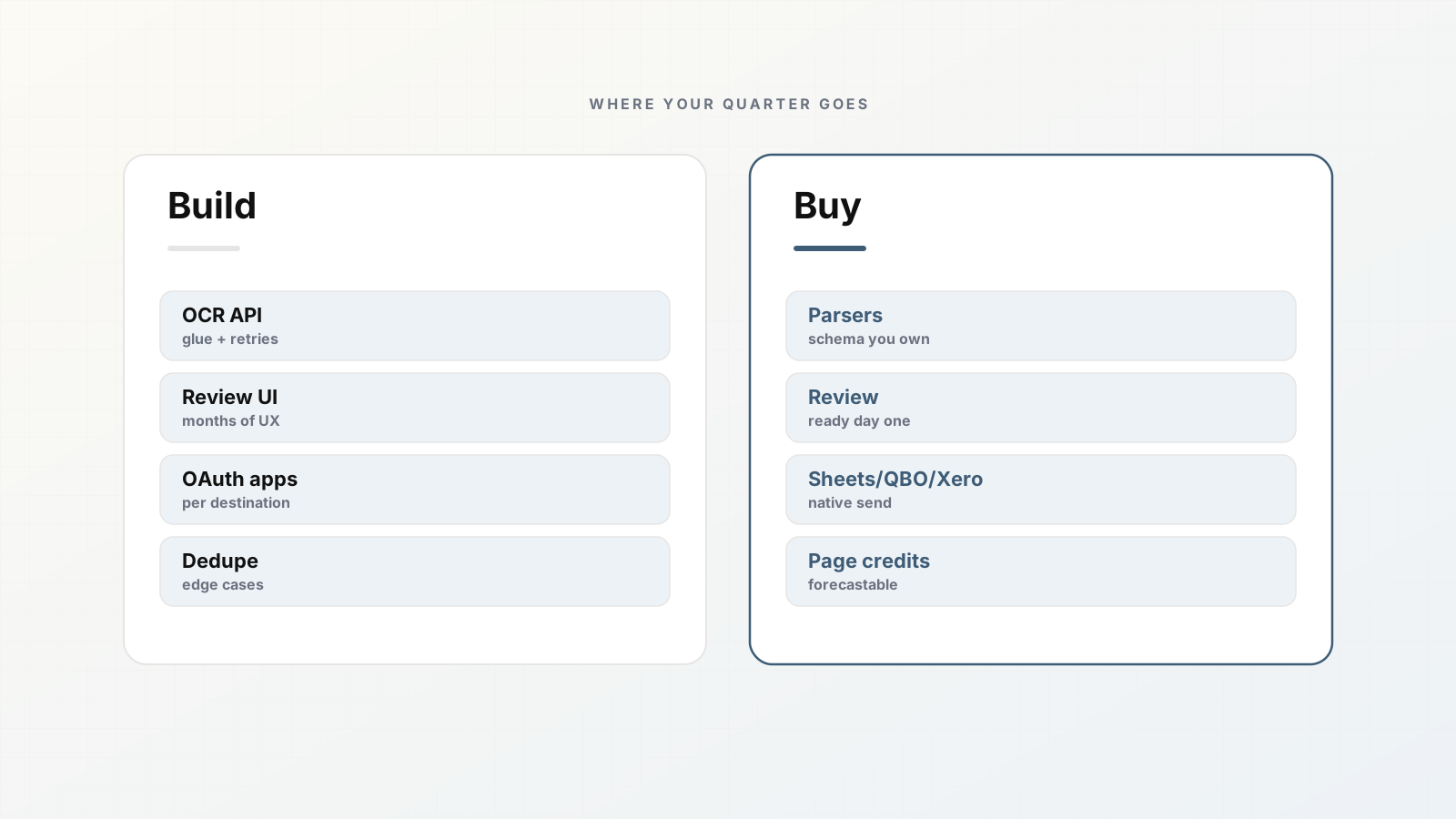
The build story is familiar: call an OCR API, write regex or an LLM prompt, dump JSON into a bucket, promise QuickBooks “next sprint.” Six months later you own a review UI nobody likes, brittle vendor mappings, and an on-call rotation for PDF edge cases.
Buying is not free either. You trade roadmap control for a product that already solved intake, review, and destinations. This post is a decision frame for ops and engineering leads, not a dunk on internal tools.
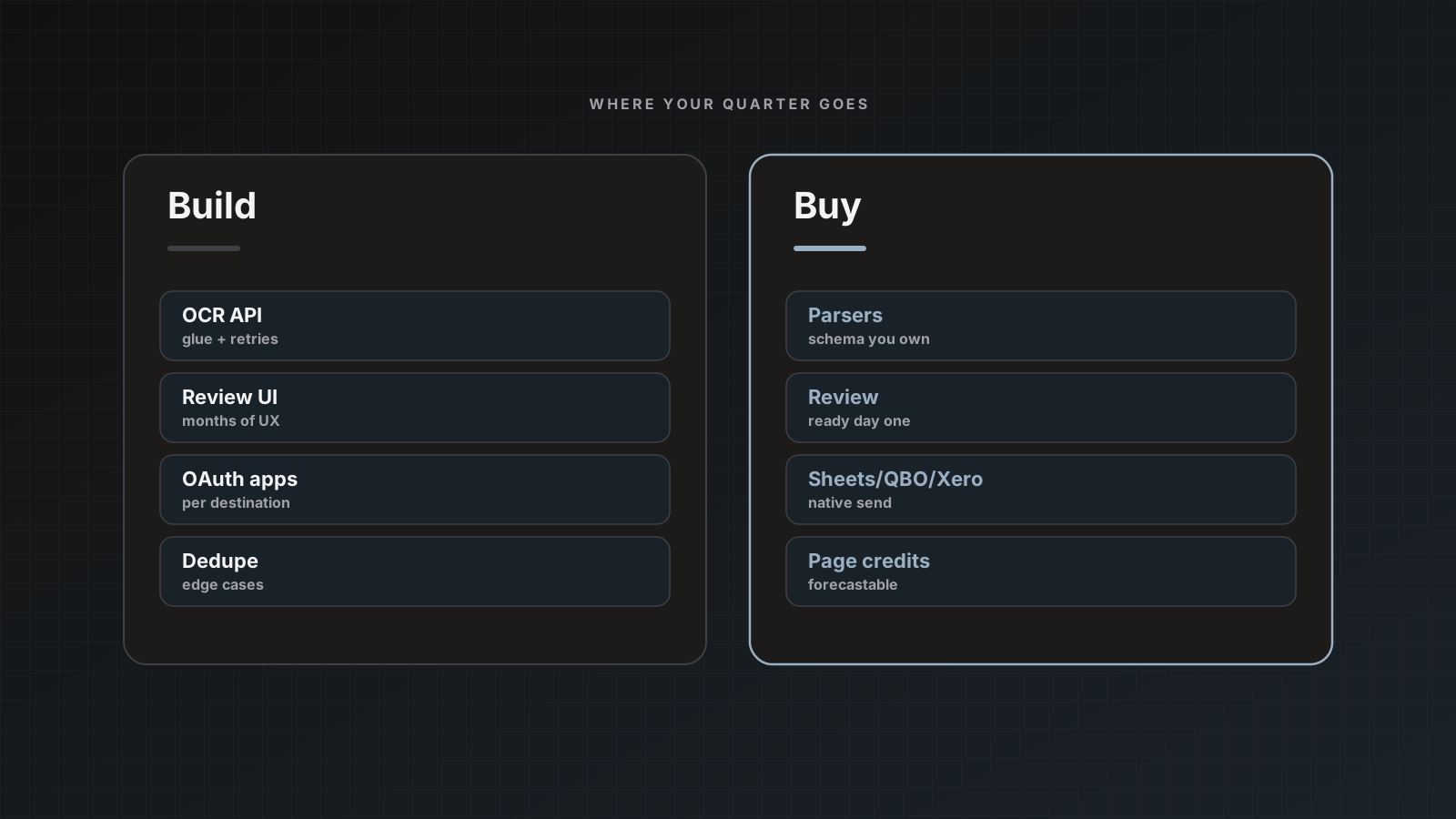
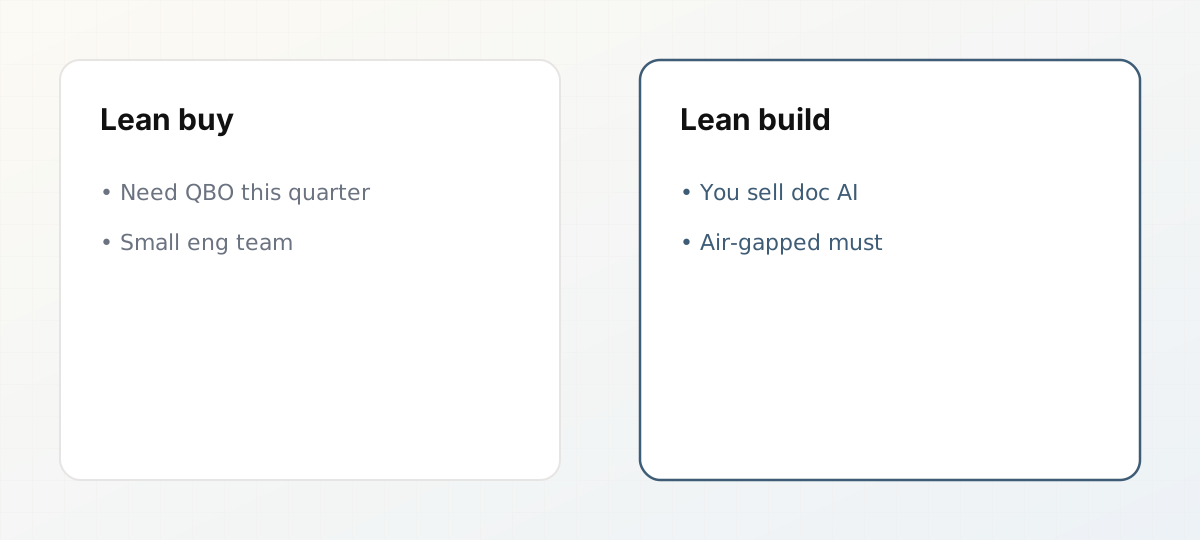 Build versus buy decision signals.
What you actually have to build
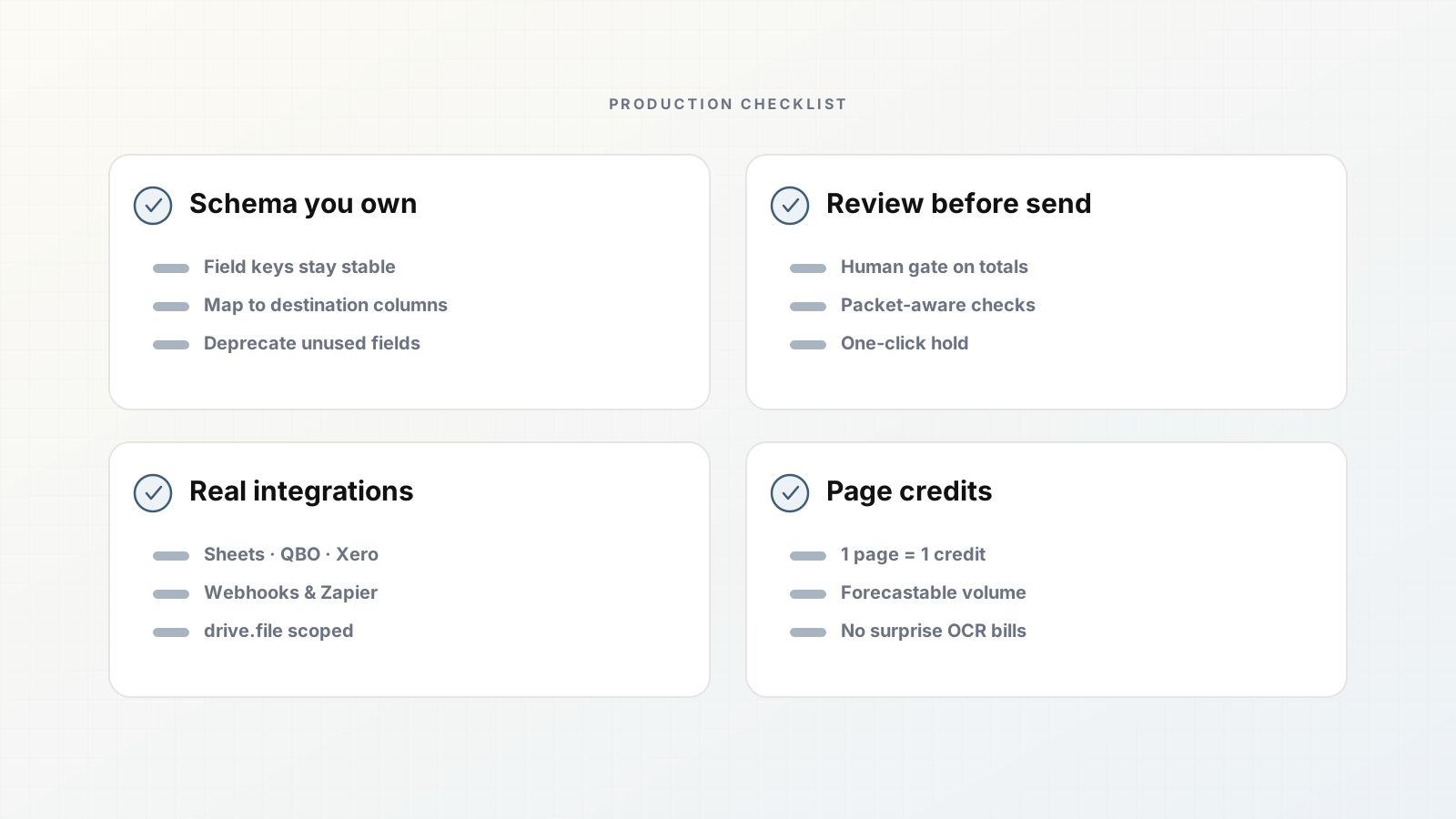
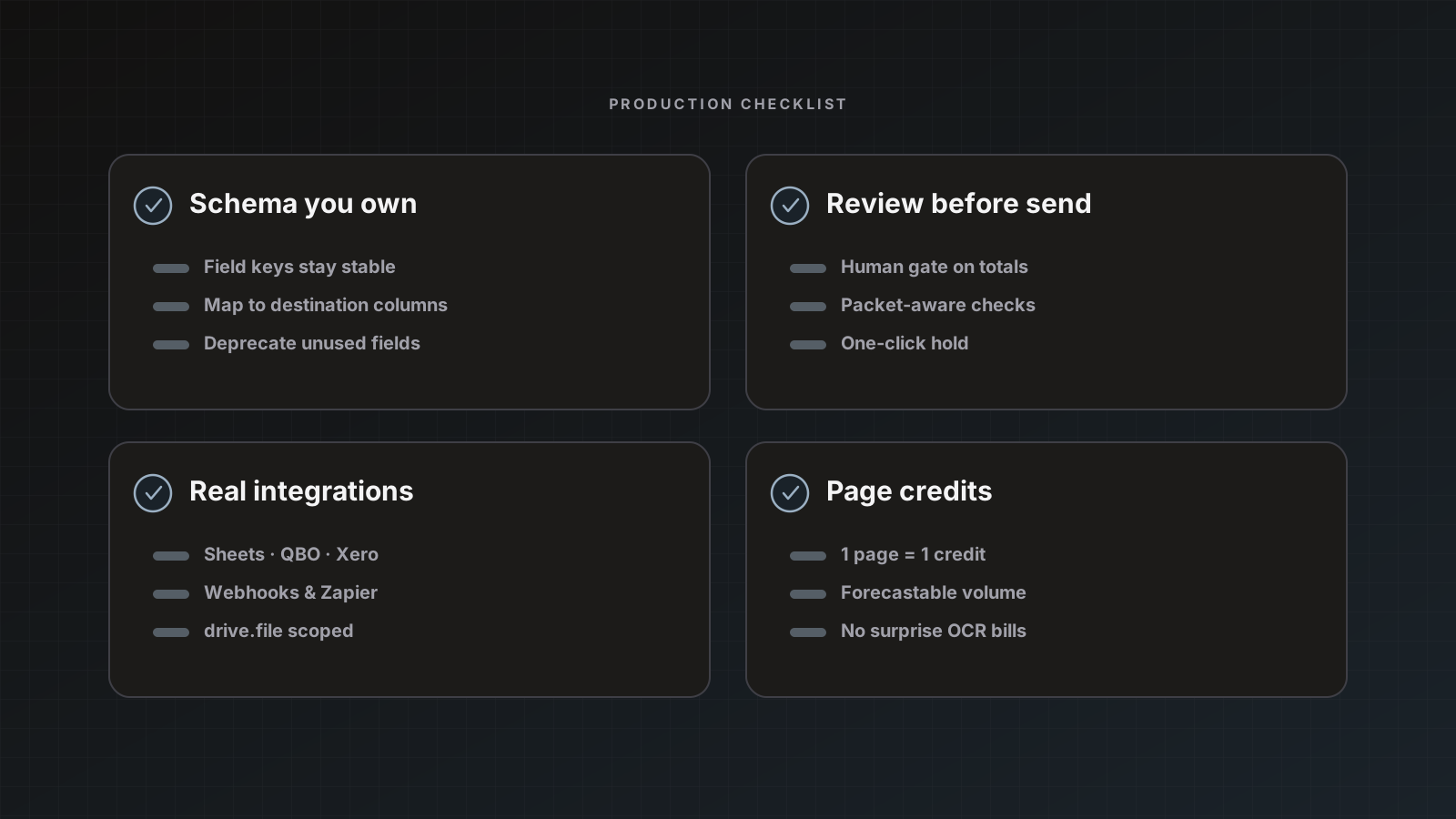
A production extraction lane includes:
- File intake (email, Drive, API, dedupe)
- OCR + extraction against a stable schema
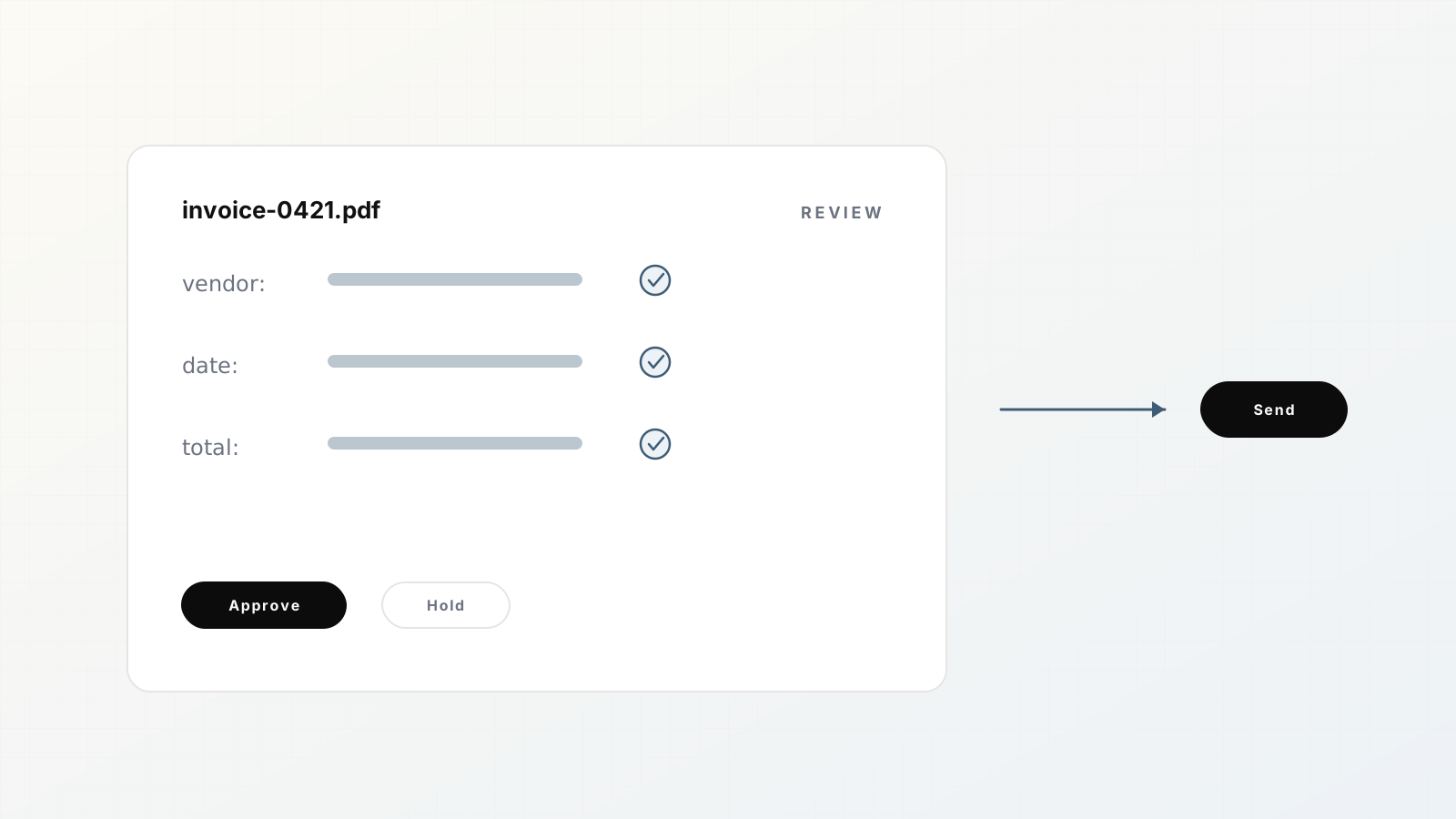
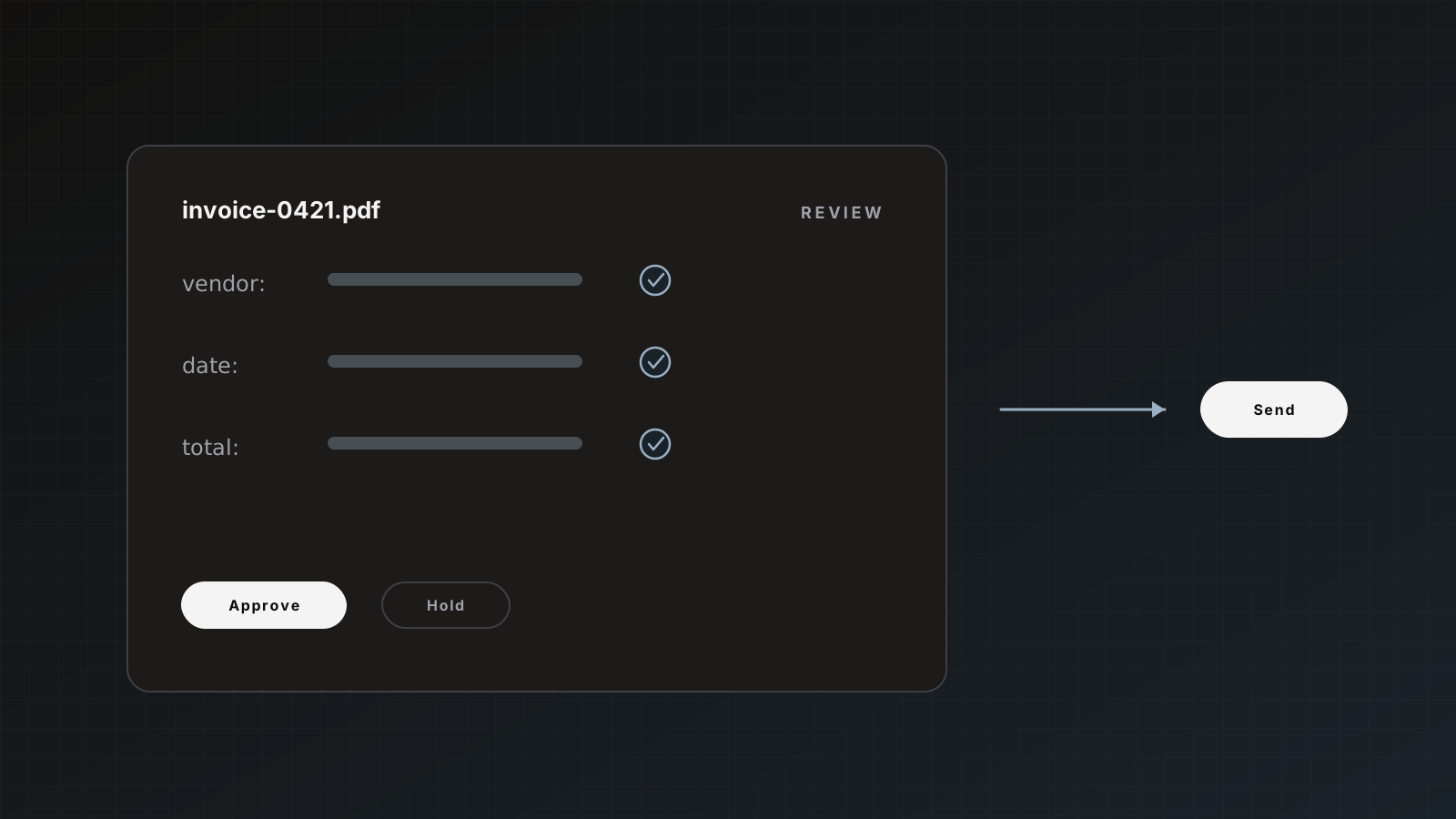
- Human review beside the source file
- Destinations (Sheets, QuickBooks, Xero, Zapier, webhooks)
- Packet splitting for mixed PDFs
- Auth, seats, audit history, retries
- Billing/usage metering if you charge internally
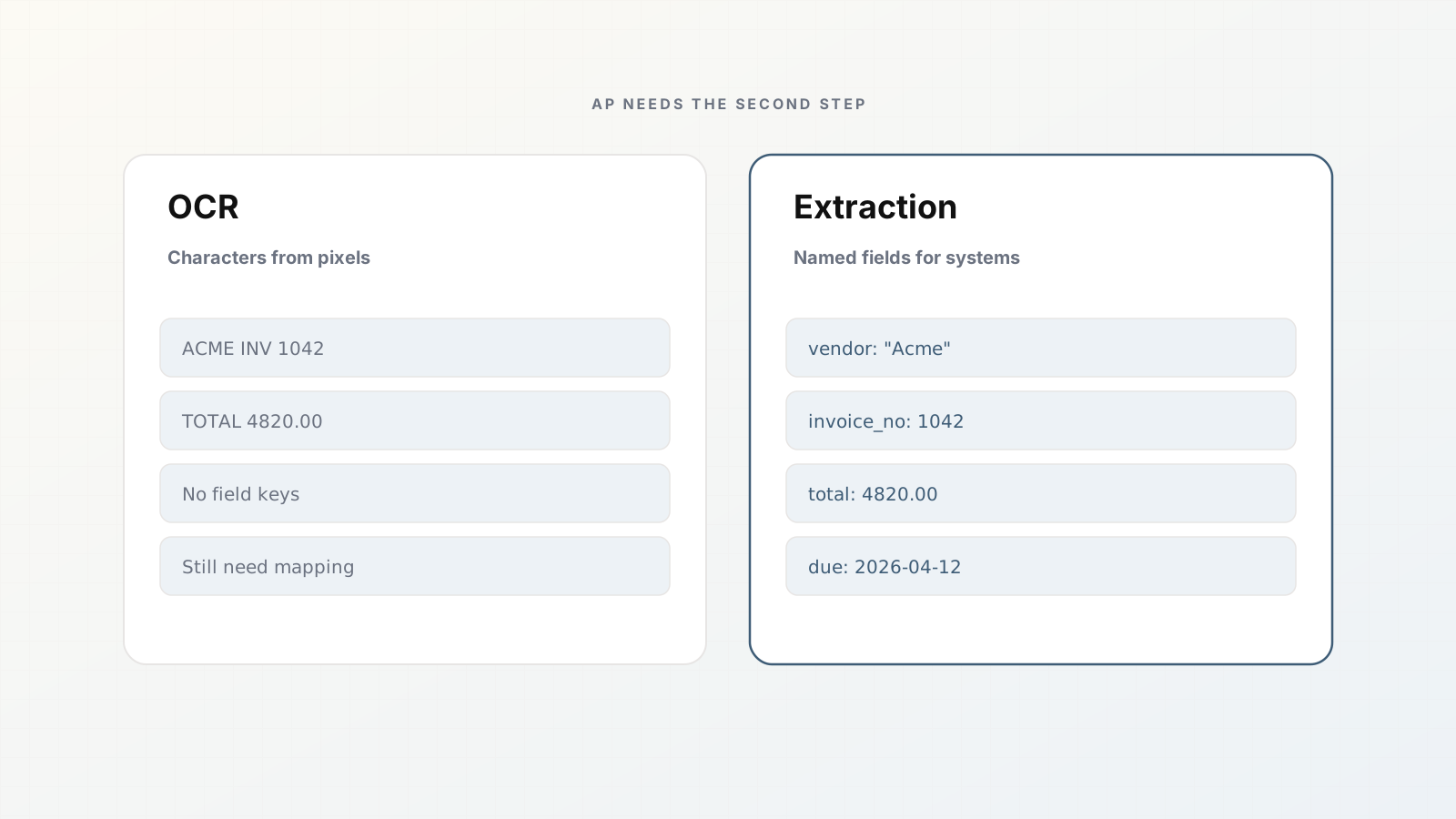
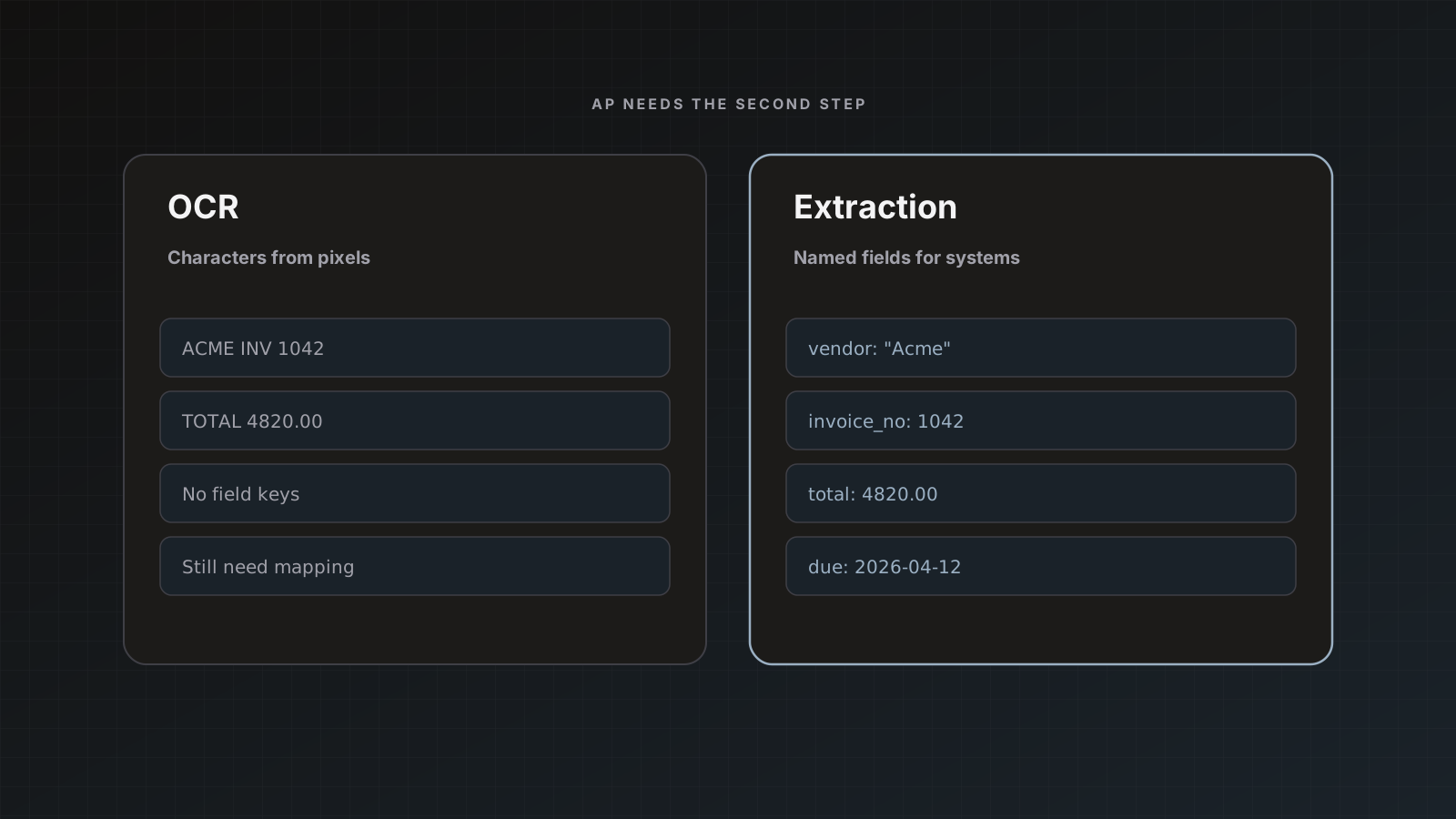
OCR is step 2a. Demos stop there. Ops pain lives in 3–6.
When building can be right
- Extraction is your product differentiator (you sell document AI)
- Schemas and destinations are truly exotic and closed
- You already have a mature internal platform team and compliance review UI
- Volume and sensitivity demand on-prem constraints a SaaS cannot meet
Even then, teams often buy for AP-like lanes and build only the unique core.
When buying fits better
- AP, logistics PODs, onboarding packets, client accounting ops
- Need Google Sheets / QuickBooks / Xero this quarter
- Small team that cannot staff PDF on-call
- Want page-based cost forecasting instead of engineering time as the unit of cost
Evaluation checklist: Five features ops need. OCR vs extraction: OCR vs document extraction.
Honest cost comparison (order-of-magnitude)
| Cost type | Build | Buy (SaaS parsers) |
|---|
| Time to first approved Sheets row | Weeks to months | Hours to days |
| Review UI | You build it | Included |
| QBO/Xero OAuth + attachments | You build/maintain | Included |
| Vendor layout churn | Your backlog | Template + review |
| Usage cost | OCR vendor + eng | Page credits |
Parsedit pricing example: Free 25 pages/mo; Starter 400; Growth 2,000; etc. See Pricing plans and Forecast credits.
Hybrid pattern
Many companies buy for invoices and PODs, keep a thin webhook consumer in their monolith, and avoid rebuilding review. Webhooks.
Where Parsedit fits
Parsedit is the buy option for parser-centric workflows: templates, review, packets, finance destinations, page credits. Soft CTA: run a two-week bakeoff against your prototype on the same vendor PDFs.
Hidden build costs teams forget
- Keeping OAuth apps verified with Google/Intuit/Xero
- Attachment upload quirks and file type limits
- Soft rate limits and retries against OCR providers
- A review UI that works on multipage PDFs
- Audit trails finance will ask for during close
- Onboarding second and third document types
Each item is a project. Together they are a product.
Bakeoff protocol (two weeks)
- Pick 50 real files (mix clean, scans, packets).
- Run your prototype and a parser product on the same set.
- Measure time to approved Sheets rows, edit rate, and destination success.
- Include engineering hours spent during the bakeoff as a cost.
If buy wins on calendar time and quality, fund integrations into your API via webhooks instead of rebuilding review.
Political reality
Build often wins arguments because engineering prefers control. Buy often wins calendars because ops needed Sheets rows last month. Make the decision against a dated pilot, not a hypothetical perfect platform. If buy unblocks AP in two weeks, you can still build later for unique document types.
Worked example: the weekend OCR prototype trap
Friday: engineer demos OCR + GPT mapping on three PDFs. Leadership applauds.
Monday: finance sends a packet PDF and a scanned credit note.
Wednesday: someone asks for QuickBooks bills with attachments.
Next quarter: you have a mini-product without review UX or dedupe.
Buy for the AP lane now. Revisit build only if you are productizing document AI itself.
Decision table you can paste into a memo
| Question | If yes, lean buy | If yes, lean build |
|---|
| Need QBO/Xero this quarter | x | |
| Document AI is the product you sell | | x |
| Team < 2 eng for this lane | x | |
| Must run air-gapped | | x |
| Multiple SaaS destinations | x | |
| One exotic format, no review needed | | maybe |
Most AP/ops teams land in the buy column for invoices and adjacent packets, then webhook into custom systems.
What good buy implementation looks like
Week 1: one parser, Sheets, real samples. Week 2: email or Zapier intake. Week 3: accounting destination for a subset of vendors. Week 4: write the runbook and measure edit rate. That is a buy success pattern. If your buy project still has no runbook after two months, you did not buy a workflow. You bought a logo.
Engineering can still own webhook consumers and internal data models. They do not need to own PDF rectangles and QuickBooks attachment quirks to create value.
Closing recommendation
Unless document AI is your product, buy a parser workflow for invoices and adjacent packets, integrate with webhooks where your systems are custom, and spend engineering on domain logic instead of PDF rectangles. Revisit build only after a dated bakeoff shows a SaaS cannot meet a hard constraint you can name in one sentence.
Build vs buy pages that convert
Give a dated bakeoff method and a decision table. Skip slogans. Controllers and eng leads both read this cluster.
FAQ
Can we export everything if we leave later? CSV/JSON exports and webhooks reduce lock-in for field data; keep source files in your storage policy.
Will a vendor train on our PDFs? See security docs and your DPA; Parsedit documents GDPR-friendly extraction choices in product security materials.
Is Zapier enough without a document product? Zapier moves files. It does not give you schema-bound extraction and PDF review.
Pilot one painful document type on a parser product before staffing a six-month build. Start free.