Document tools that bill per “document” hide the cost of 20-page statements. Parsedit bills in pages: 1 credit = 1 page. Forecasting is arithmetic plus honesty about packets and scans.
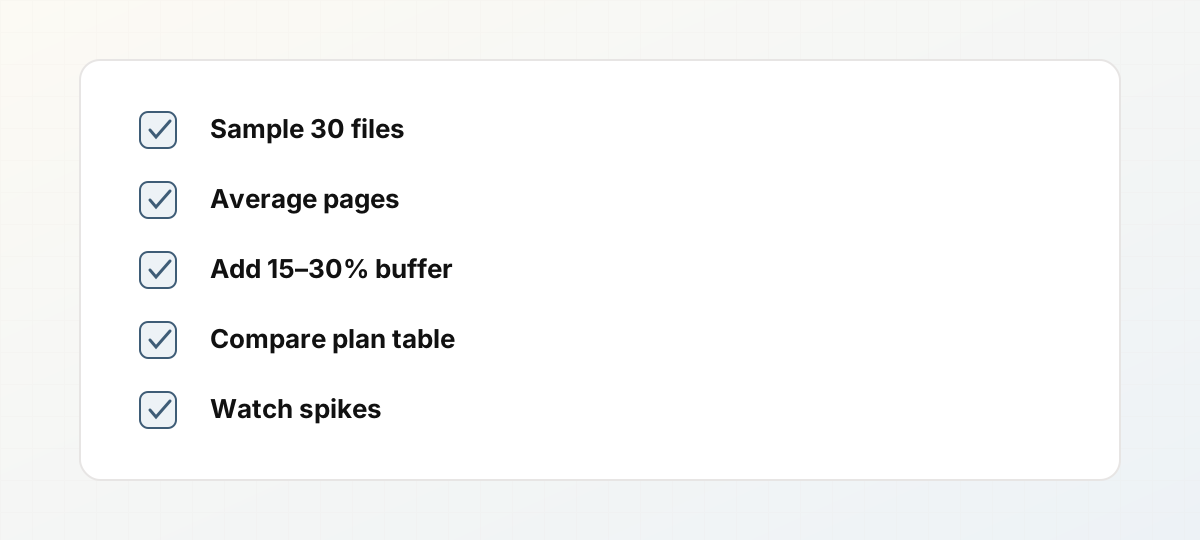 Page credit forecasting steps.
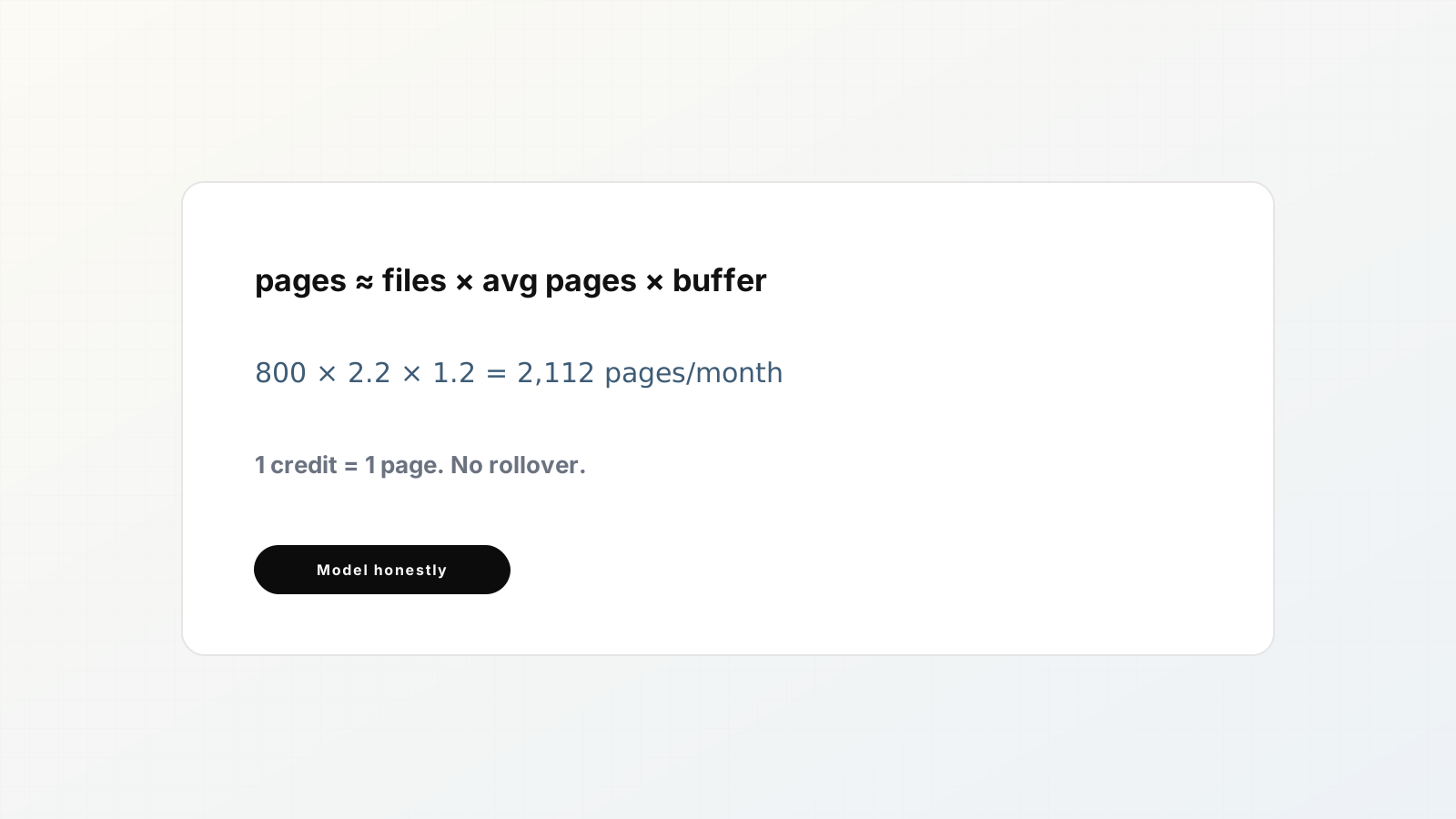
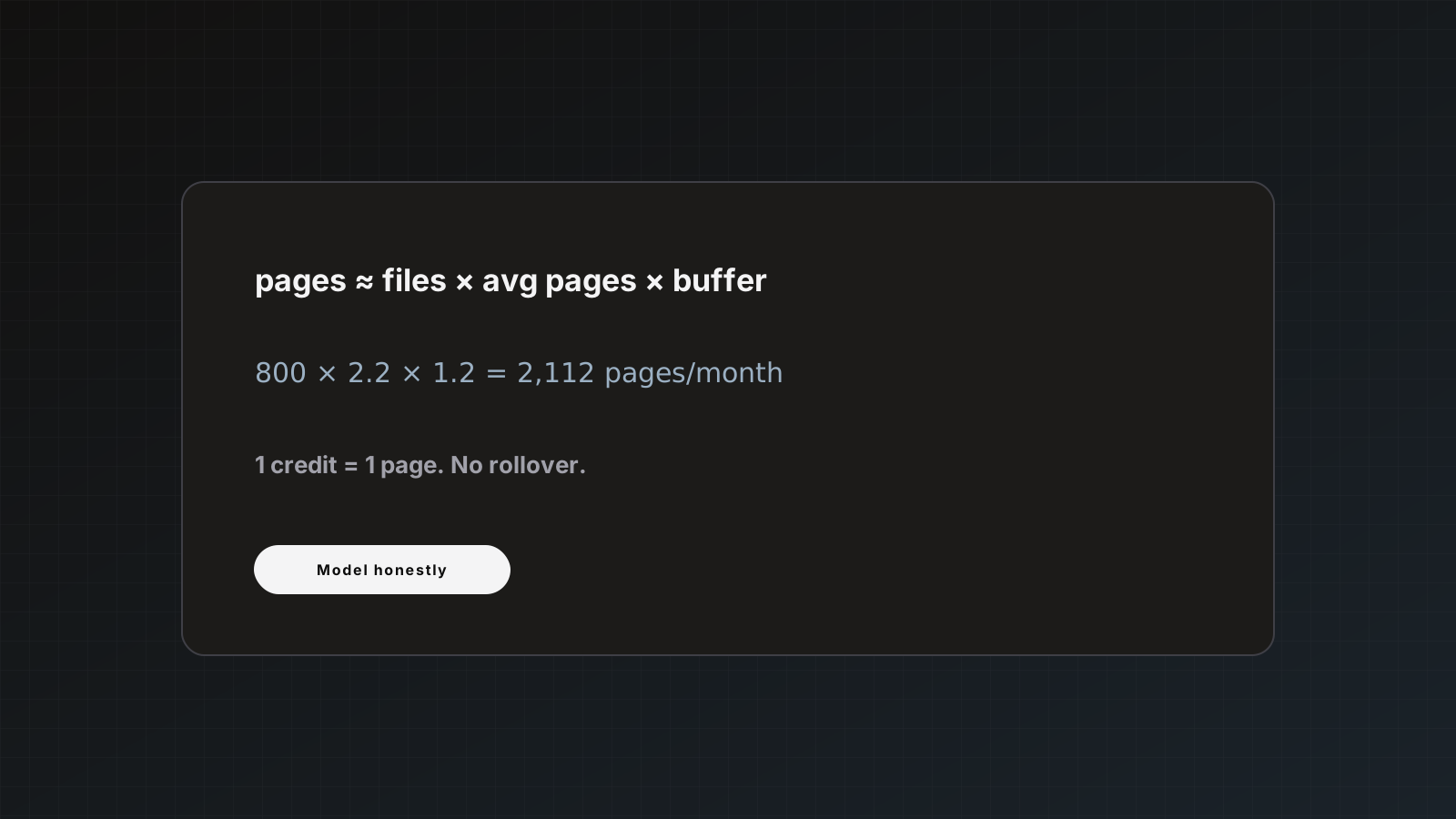
monthly_pages ≈ files_per_month × average_pages_per_file × (1 + buffer)
Buffer 15–30% for:
- Mixed packets larger than you remember
- Re-uploads that are not exact duplicates
- Occasional statement dumps
Identical re-uploads to the same parser skip without consuming quota. Near-duplicates do not.
Worked examples
AP inbox
- 800 invoices/month
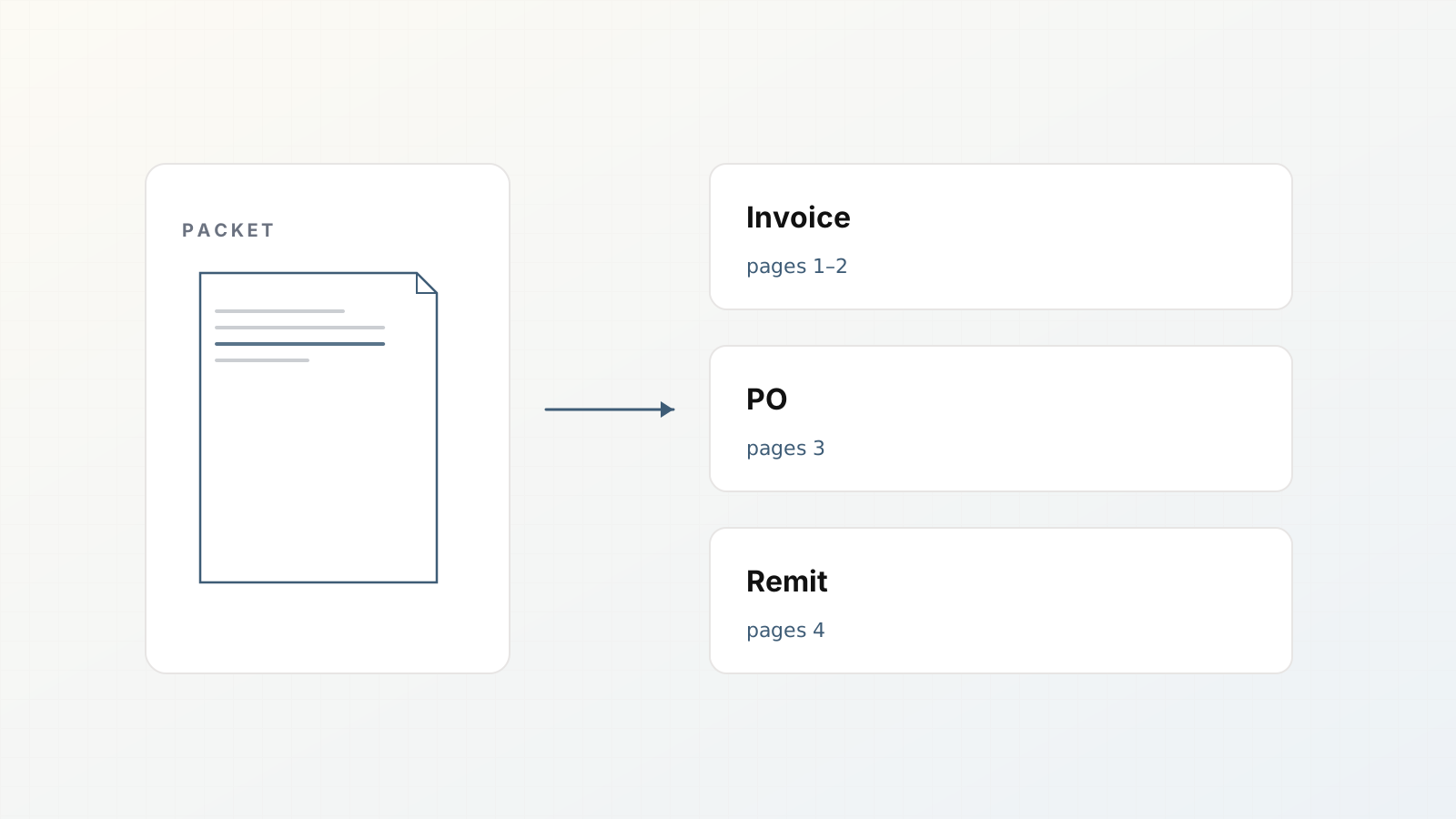
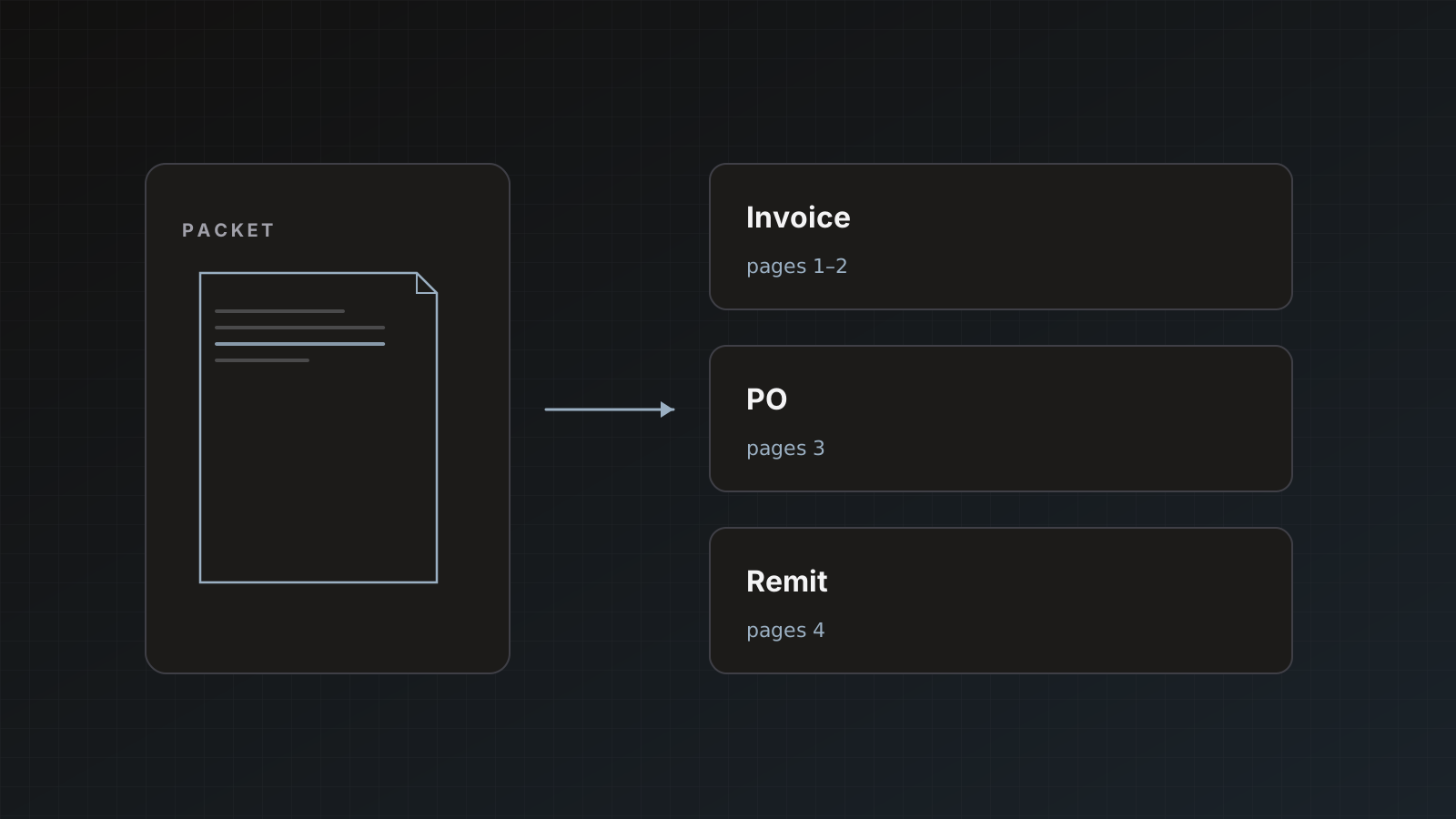
- Average 2.2 pages (many 1–2 page PDFs, some 4-page packets)
- Buffer 20%
800 × 2.2 × 1.2 = 2,112 pages/month → Growth plan territory (2,000 pages/month) with little headroom; consider Growth carefully or Pro if spikes hit.
Logistics PODs
- 3,000 photos/month
- Usually 1 page each
- Buffer 10%
3,000 × 1 × 1.1 = 3,300 → above Growth; plan Pro (8,000) or reduce reprocessing.
Claims packets
- 200 files/month
- Average 12 pages
200 × 12 × 1.25 = 3,000 → pages dominate file counts. Always sample real PDFs.
Plan table (monthly)
| Plan | Pages / month | Parsers | Seats (included) |
|---|
| Free | 25 | 3 | 1 |
| Starter | 400 | 10 | 2 |
| Growth | 2,000 | 25 | 5 |
| Pro | 8,000 | Unlimited | 50 |
| Business | 35,000 | Unlimited | 100 |
Yearly billing grants 12 × monthly pages as one annual bucket. No monthly drip on yearly. No rollover across periods. Details: Pricing plans, Billing, internal logic notes in repo billing docs.
Sampling method (30 minutes)
- Export last month’s AP/Drive folder file list.
- Open a random 30 files; note page counts.
- Compute average and 90th percentile.
- Multiply by expected monthly files.
- Add buffer; compare to plan rows.
- Revisit after the first paid month using the sidebar credits pill.
Pitfalls
- Estimating from “number of invoices” while vendors send 10-page packets
- Ignoring yearly vs monthly semantics
- Forgetting client workspaces pool pages on the owner’s subscription (as documented)
Where Parsedit fits
Page credits keep cost tied to processing. Soft CTA: start Free (25 pages) to measure real averages on your files, then pick Starter/Growth with data. Related: Build vs buy.
Yearly vs monthly decision
Monthly plans reset each billing period with that month’s allotment. Unused pages do not roll over.
Yearly plans grant twelve times the monthly page number as one prepaid bucket for the year. There is no monthly drip. If you process unevenly (heavy Q1, light Q3), yearly can still fit, but a huge early spike can exhaust the annual bucket early. Model seasonality before you checkout yearly.
Upgrade paths top up or reset depending on whether the billing period advances. Downgrades schedule for period end without clawing back unused pages mid-cycle. Read Pricing plans when you change tiers.
Client accounting firms
Pages and seats on client workspaces pool on the owner’s personal subscription. You do not buy a separate plan per client. Forecast the sum of client page volume, not a single client in isolation.
Spike planning
Promotions, year-end, and audit requests create page spikes. If your average is 1,600 pages and November hits 3,000, Growth (2,000) fails. Options: upgrade for the spike month, defer noncritical backfills, or split low-value scans out of the parser.
Watch the sidebar credits pill weekly during known peak seasons. Empty credits mid-close is an avoidable injury.
Worked example: choosing Growth vs Pro
You measure 30 files: average 3.1 pages, 90th percentile 7. Monthly files ~900.
Average path: 900 × 3.1 × 1.2 = 3,348 pages.
If you plan only on averages, Growth (2,000) fails. Pro (8,000) fits.
If half your “files” are one-page receipts in a separate parser, split forecasts per parser. Blended averages hide the statements parser that burns the budget.
Pricing/credits intent
Page credit calculators and document AI pricing searches need formulas and plan anchors. Show worked examples with packet page reality.
FAQ
Do review edits consume pages again? No. Processing consumes pages.
Do failed extractions always refund? Follow billing docs for what counts; plan using successful production volume primarily.
Teams and seats? Seats are plan-limited; pages are separate. See pricing docs.
Sample 30 files this week before you renew anything. Create an account.